"Correct" Life

From Chūshingura to the 4 Basic Principles

by Koretoshi Maruyama Sensei

Four Basic Principles

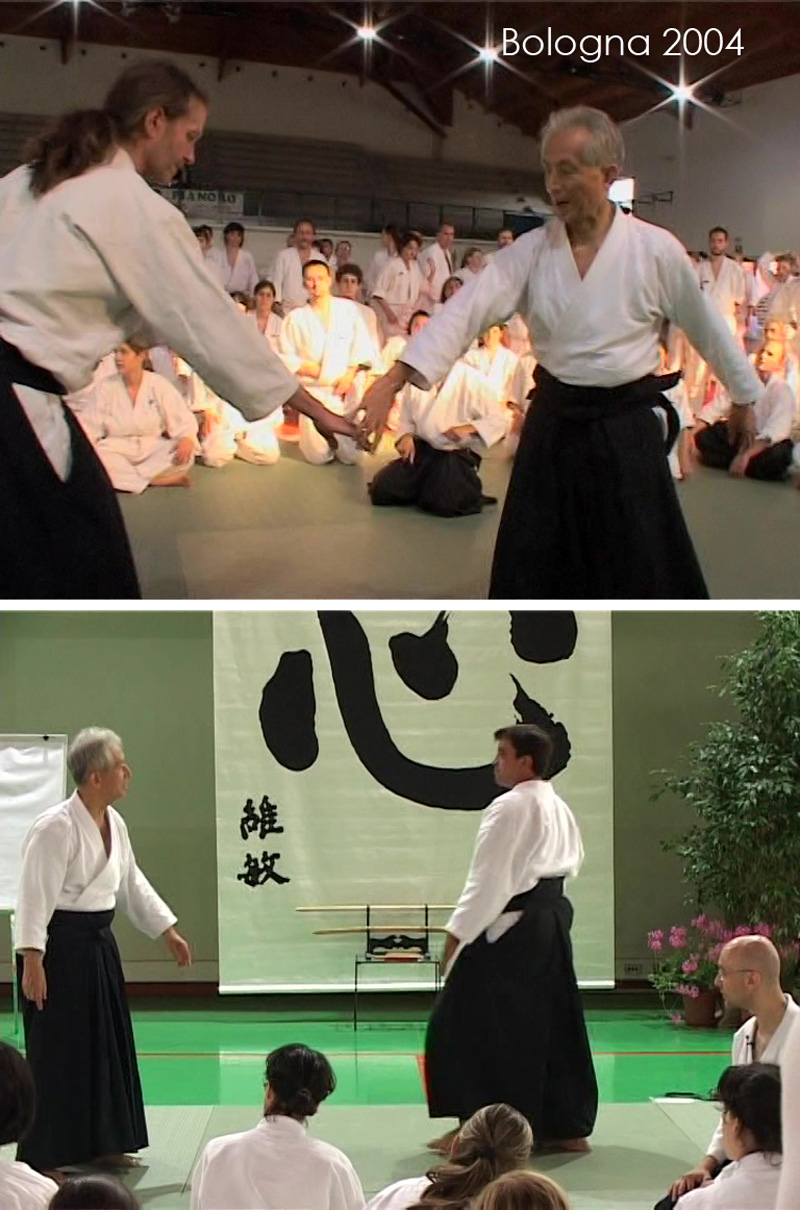
In April 2025, Koretoshi Maruyama Sensei – formerly Chief Instructor of the Ki no Kenkyukai and later founder of Aikido Yuishinkai – published a post on Facebook. His post covers a wide range of topics, from ‘Chūshingura’ (‘The Revenge of the 47 Ronin’) – the subject of previous six blog posts here – to Koichi Tohei Sensei’s ‘Four Basic Principles’ and beyond.
The translation in English is based on the Japanese original. My own comments are placed in brackets.


Koretoshi Maruyama Sensei writes:

正しく生きるために
Living in a "correct" way

President of Aikido Yuishinkai, Koretoshi Maruyama
The word ‘correct (正しく ただしく)’ in the title refers to ‘justice (正義 せいぎ)’.

There is a frequently quoted saying: ‘As soon as a person speaks of justice, they make enemies.’ This is indeed true: even in the current conflict between Russia and Ukraine, each side claims that its own position is ‘justice’.
Furthermore, the concept of ‘justice’ changes with the times. A good example of this is ‘Chūshingura’, which is probably familiar to every Japanese person. It is the story of the 47 Ronin of Ako, led by Oishi Kuranosuke, who killed their lord’s murderer. During the Edo period, this was a highly praised tale of justice, but if, in a company today, the managing director were to be brutally murdered and, as a result, 47 employees were to break into the perpetrator’s house in the middle of the night and behead him, hardly anyone would describe this as ‘justice’.
Fully aware of this fact, I have taken the liberty of using the term ‘correct’.
This is because modern-day Japan, under the guise of ‘liberalism’, is far too fixated on ‘self-interest’. In other words, most people would probably agree with the statement: ‘As long as one does not break the law, it is the individual’s freedom to behave and express themselves as they want.’
[Here follow two recent examples of anti-social behaviour in public life] Admittedly, such behaviour does not break the law. But do you accept such behaviour as an expression of freedom?

Before the Second World War, Japanese children were taught from an early age by their parents: “Become a person who works for the good of the world and for the good of others” and “You must not cause inconvenience to others”.
Nowadays, the attitude is more like: “For others? That’s a joke. I work for myself, for the money. Cause others inconvenience? That’s a joke. I use others as a stepping stone to get myself to the top.”

I suspect that many people act in accordance with these words. At this point, I’d like to make a case for a ‘correct’ life. Anyone who disagrees is kindly asked not to read on.

‘For the good of the world and for others’ and ‘not to cause inconvenience to others’ – to become a Japanese person who lives by the principles of shared prosperity – these are the ‘four fundamental principles for a righteous life’:

The four fundamental principles for a correct life
1. Calm the mind (心, kokoro, SHIN) in the tanden below the navel
2. Completely remove all force from the entire body
3. Shift the weight of all parts of the body to the lowest point
4. Radiate ki

I suspect that there are members of the former ‘Ki no Kenkyukai’ – now known as the ‘Shin-Shin-Toitsu-Aikido-Kai’ – who, on reading these lines, will shake their heads and ask themselves: ‘Hold on a moment, what on earth is that?’ Yes, that’s right. Although the wording has been slightly altered, these principles closely resemble the four fundamental principles established by Tohei Koichi Sensei, the founder of the Shin-Shin-Toitsu-Aikido-Kai.

To be frank: the four fundamental principles of the ‘Ki no Kenkyukai’ were formulated in Shōwa 48 [1973], when Tohei Koichi Sensei left the ‘Aikikai’ and founded the ‘Ki Research Society’. That year, we received an invitation from an Aikidō master named S. from the Tōhoku region, and these principles were developed on the night train whilst Sensei and I were travelling there.
At that time, the ‘Nishi Health Method (西式健康法, nishishiki kenkōhō)’ was very much in vogue, and Sensei had [already] stayed in Hawaii in Shōwa 27 [1952] at the invitation of the ‘Hawaii Nishi Society (ハワイ西会, hawai nishikai)’. The Nishi Society had formulated the ‘Six Basic Principles of the Nishi Health Method’, which Ueshiba Morihei Sensei had also adopted.

Consequently, a proposal was put forward within the ‘Ki Research Society’ to formulate ‘four fundamental principles’. Without getting a moment’s sleep, Tohei Sensei and I discussed various formulations on the night train: ‘How about this?’, ‘No, Sensei, wouldn’t this wording be more appropriate?’ and so on, until finally the ‘Four Fundamental Principles of the Union of Body and Mind’ were finalised.
These principles are therefore, in a sense, a joint effort by Tohei Koichi Sensei and myself. Even if I were to alter the wording slightly and refer to them as ‘The Four Fundamental Principles for a Correct Life for Members of the Aikido Yuishinkai’, Tohei Koichi Sensei would probably smile and overlook it from the afterlife.

If you calm your mind in the area below your navel and think and act from there, it will become clear to you of its own accord what the motto ‘for the good of the world and other people’ means, and how to ‘avoid causing inconvenience to others’.

I will be 89 this year (2025). Yet whenever an elderly person with a walking stick boards a crowded train, I always offer them my seat. I do this ‘for the good of the world and of others’. If everyone were to act not according to liberal principles but on the basis of the principle of shared well-being and coexistence, true peace would prevail.

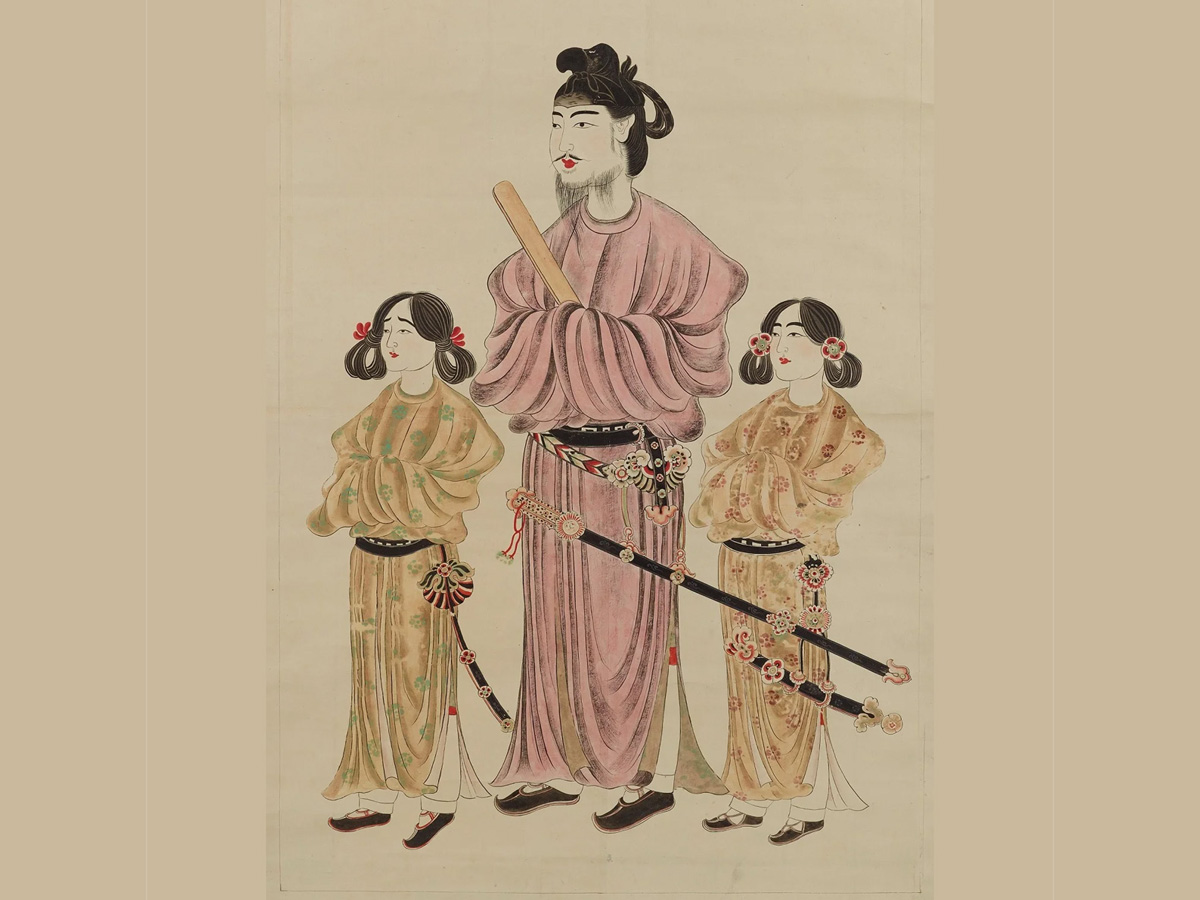
“Harmony is a very high value” – these are the very words of Prince Shōtoku (聖徳太子, Shōtoku-taishi, 574-622).


Nishi-shiki Kenkōhō

The Nishi-shiki Health Method (西式健康法) was developed by Nishi Katsuzō (西 勝造, 1884–1959) and published in 1927.
Six Rules for Good Health
1. Sleep on a hard, flat surface – no mattress
2. Use a hard, semi-circular pillow placed under the neck
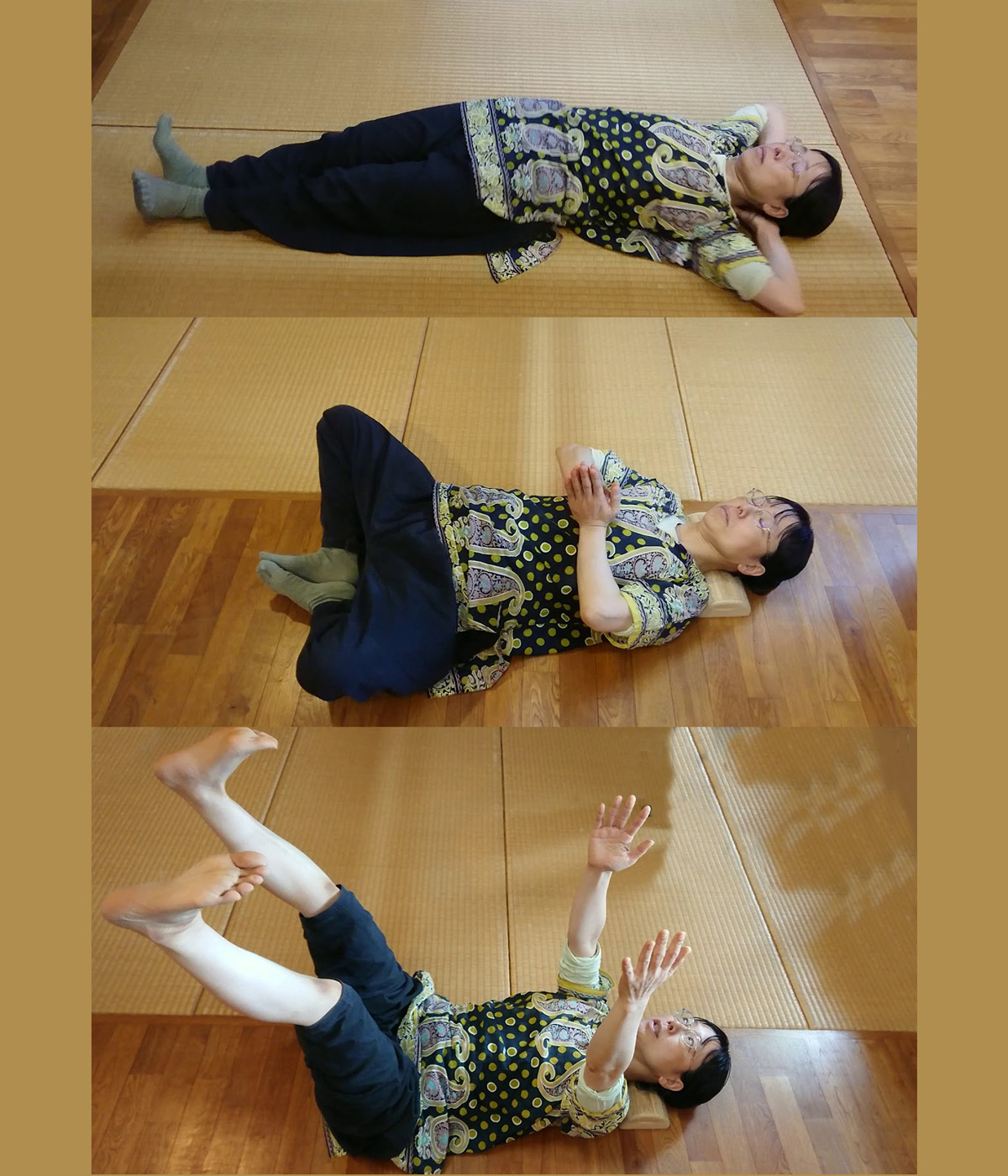
3. Perform the ‘Golden Fish’ exercise for 1–2 minutes in the morning and evening: lying on your back, cross both hands beneath your neck and vibrate your whole body lengthways like a fish wriggling in the water
4. The ‘Capillary Exercise’ should also be done in the morning and evening: lying on your back, raise your arms and legs and shake them
5. The ‘Folding Hands and Feet’ exercise
6. The exercise for the spine and abdomen: sit upright and tilt your upper body far to the left and right

Other important health guidelines include: breathing exercises, hardening through air and water baths (warm/cold), eating only two meals a day: at lunchtime and in the evening, eating at least three different types of raw vegetables daily, and drinking water.
Katsuzō Nishi was also an Aikido instructor at the Aikikai Hombu Dojo. This is how many Aikidoka became familiar with the Nishi health system. This led to the integration of a series of exercises into Aikido.

Shōtoku Taishi

Shōtoku Taishi (聖徳 太子, lit. Crown Prince Shōtoku; born 574; died 8 April 622) was a Japanese prince. According to tradition, as regent he initiated numerous cultural reforms during the Asuka period. The prevailing view amongst Japanese historians today is that, whilst he did indeed exist as a person, no deeds can be substantiated apart from the founding of the Hōryū-ji temple in Ikaruga.
The figure of the prince was idealised from the very beginning. Over the course of Japanese history, numerous sacred objects and statues were attributed to his influence and were therefore regarded as particularly powerful. The prince himself increasingly became a supernatural figure to whom people prayed for blessings and protection. Even today, Shōtoku is still venerated in Japan.