Bushido, Samurai etc.
Part II

Japanese culture in the Genroku era

Japanese culture around 1700

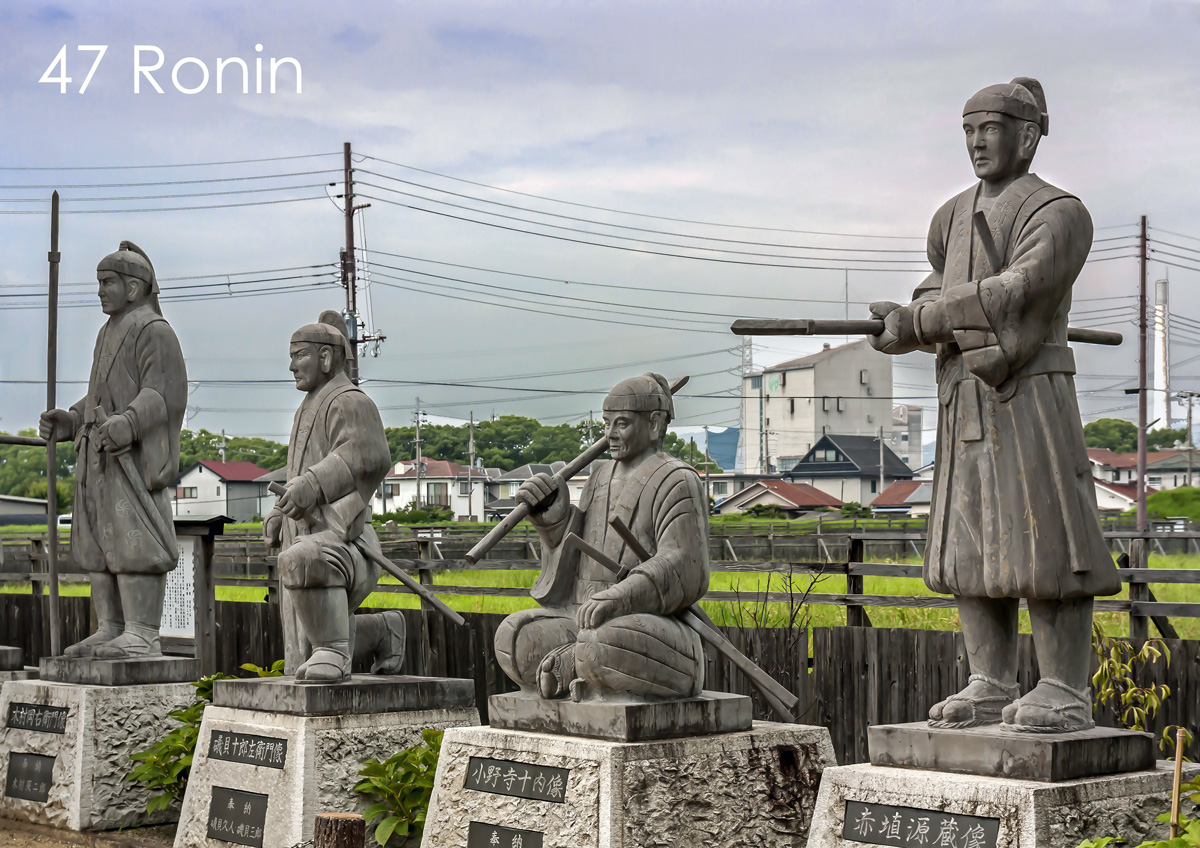
In the introduction to his translation of the famous play “Kanadehon Chushingura” (仮名手本忠臣蔵, also known as “The Revenge of the 47 Ronin”), the translator Jukichi Inoue describes the social situation in Japan around 1700. He addresses Western readers in particular.
We thus learn how a Japanese author in 1910 viewed his own country’s recent and more distant past.

2 The times of Ako Vendetta

Jukichi Inoue writes:

In spite of these linguistic difficulties, an attempt has been made, it is to be hoped not altogether without success, to give in the present work the plot and spirit of the Chushingura. But for the full comprehension of the play and its motif, the reader should possess some acquaintance with the social condition, manners, and ideas of the time to which it refers.
The vendetta of the retainers of Ako, which forms the subject of the play, took place early in 1703; and the play saw the light forty-five years later, in 1748. It was a production of the golden age of Tokugawa literature. During the little more than a century and a half that have since elapsed, remarkable changes have come over society.

The peace which had lasted under the Tokugawa Shogunate for two centuries and a half was rudely broken by the cannon’s roar off the coast of Uraga [American cannon boats]. Soon after, with the Restoration of the Imperial authority, the nation began to introduce the civilisation of the West. Our wars with China and Russia have greatly influenced the whole society, and our customs and manners undergone marked changes.
In these days it is difficult to form a clear idea of the state of society under the feudal régime. Few of those people to-day who leave Shimbashi by the night express to awake next morning at Kobe have a definite conception of the daimyo’s procession that used to be borne on the shoulders of coolies across the River Oi which they pass in their sleep.
The postal halting-places have become railway stations, and express couriers have been replaced by telegraph. And we can hardly imagine how cheap life was held in the old times when, for the loss of their lord’s treasured article, retainers who had faithfully served him and his fathers had to surrender their lives and family estates. We can hardly bring ourselves into sympathy with those lovers who, taking their lives into their own hands, have become subjects of songs for their suicide. When even we Japanese at the present time are thus out of touch with much that was of common occurrence in our forefathers’ days two centuries ago, it is only to be expected that Old Japan should appear almost incomprehensible to the Western peoples whose manners, customs, and ways of life are totally different to ours.
It is therefore believed that it would not be an altogether needless task to make a few remarks here on the condition, manners, and thought of society at that time.

3 The Tokugawa Shogunat

Before treating, however, of the Genroku age in which the vendetta of the Ako retainers took place, which has left such a mark upon the history of this country, we must glance at the period of the Tokuwaga Shogunate.
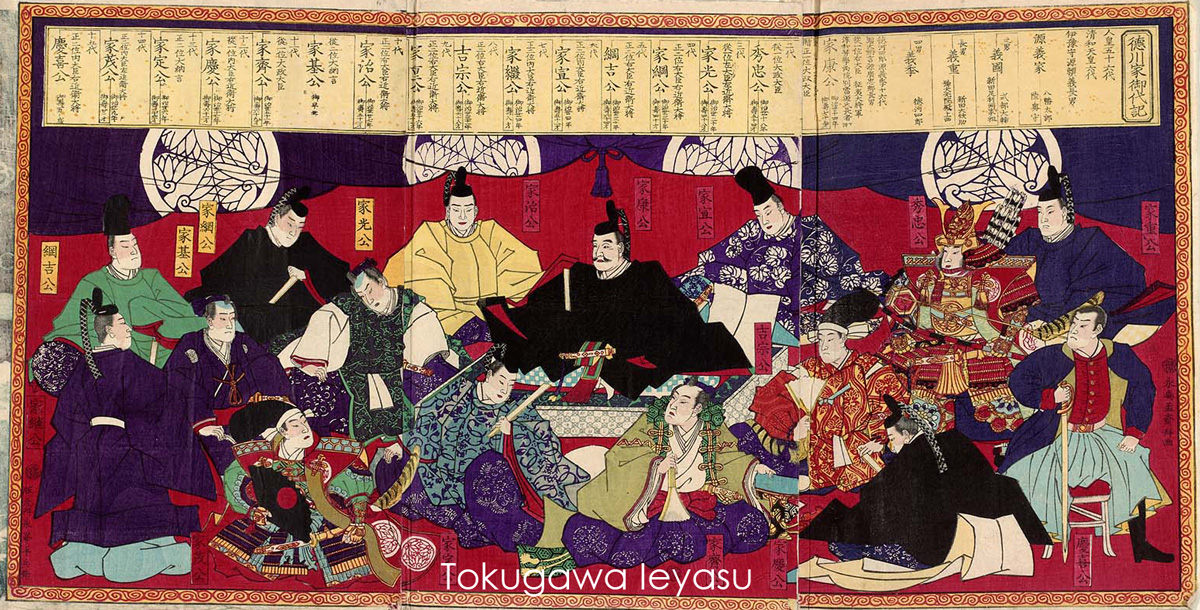
That period lasted two hundred and sixty-four years from the appointment to the Shogunate of Tokugawa Ieyasu in 1603 to the surrender of political power to the Emperor by Tokugawa Yoshinobu in 1867. Towards the close of the Ashikaga Shogunate (1338-1573), the country was torn by factions and plunged in civil war. But the great hero Toyotomi Hideyoshi, better known as the Taiko, gave the country a brief respite from war.
The predominance of his house, however, lasted only for two generations; and on the defeat of his son by Ieyasu in 1600 at Sekigahara, supreme power fell into Ieyasu’s hands. The campaigns of Osaka in 1614 and 1615 put an end to the Toyotomi line. The nation now bowed to Ieyasu’s authority, and his house ruled over it for more than two centuries and a half.

4 THE IMPERIAL COURT

Society during the Tokugawa period may be generally divided into four classes, the kuge, the samurai, the common people, and the lowest classes.
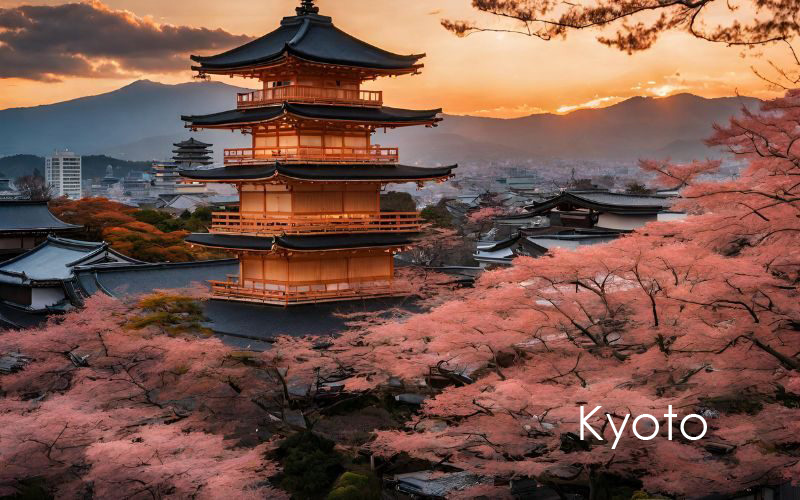
The Emperor reigned over the country at Kyoto. Around him were the Imperial princes, some of whom were qualified to succeed to the Throne in case of failure of Imperial issue. The kuge, or Court nobles, numbered about one hundred and thirty. Their titles and offices were hereditary. They were jealous of their social position. They attended daily at the Imperial Court; but their duties mostly concerned the grant and deprivation of Court rank, various ceremonies, and Court etiquette.

Administrative affairs were entirely in the hands of the feudal government. All business between it and the Imperial Court was transacted by a few high officials.
The political authority over the whole nation was held by the feudal government. The feudal system was first established by Minamoto no Yoritomo towards the close of the twelfth century; at first there was no intention of replacing the Imperial Court in the government of the country; but from various causes the political and military power fell into the Shogun’s hands. The Emperor merely watched over the sacred treasures of his House and delegated political power to the feudal government.
During the civil wars the fortunes of Imperial Court seriously declined; but Ota and Toyotomi, who were loyal to the Throne, presented landed estate to the Court when they had brought the country into peace. Tokugawa frequently built Imperial palaces and presented funds for household expenses; and the Imperial House was placed in easier circumstances.
But it was the policy of the Tokugawa family to hold the real power over the nation. In 1614, Ieyasu established regulations for the control of the kuge, by which although the real power of the Imperial House was diminished the principle of loyalty to the Throne and distinction of lord and subject were strictly maintained, and Tokugawa himself set the example to the nation by his reverent treatment of the Imperial Family. Although this attitude towards the Throne was a policy of Ieyasu, it was also an expression of the innate loyalty and patriotism of the people.
Thus, the dignity of the Imperial Family remained unimpaired; and it may be seen from the original cause of the Ako revenge how high the importance was attached to the reception of Imperial envoys.

5 The Samurai

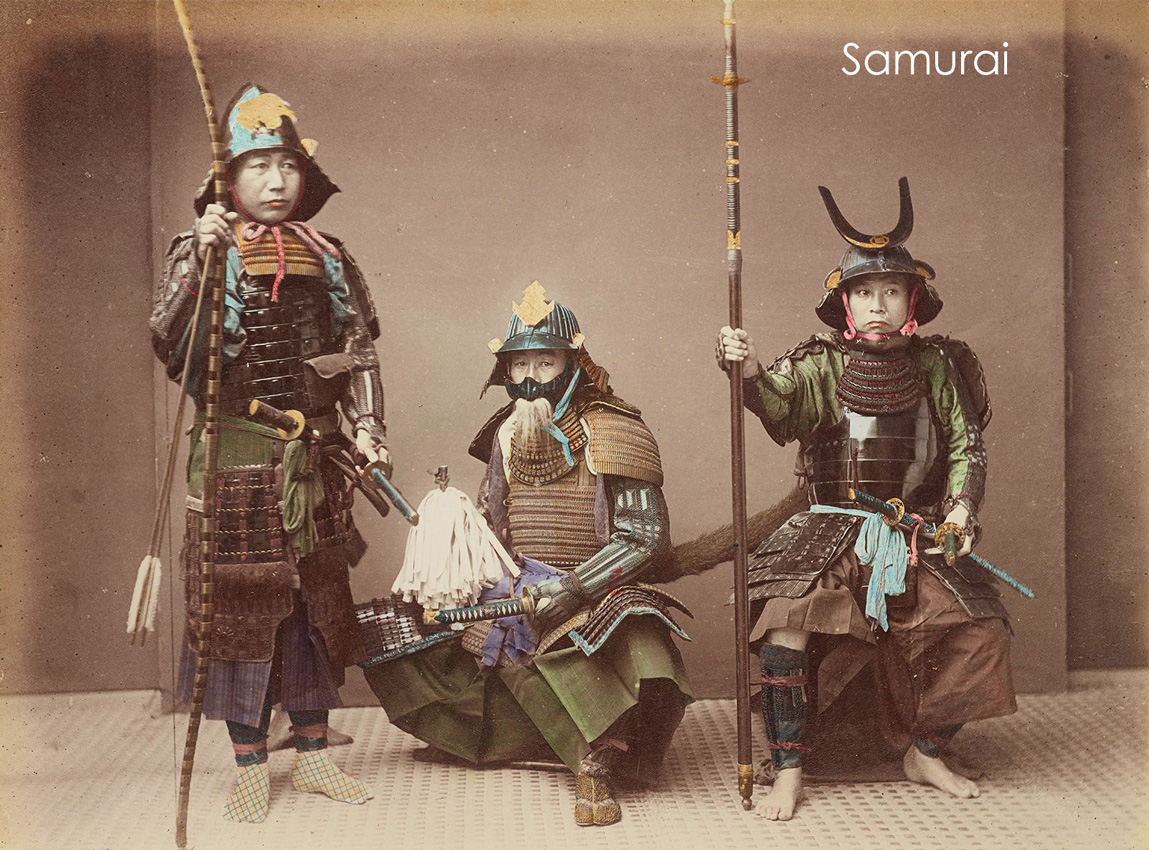
The samurai were all under the control of the feudal government. Those whose annual stipends were not less than ten thousand koku of rice were called daimyo, those below them were hatamoto, and the lowest were kenin.
The daimyo were of three classes, lords of provinces, lords of castles, and lords of domains without castles. They ruled over their domains. Asano Takumi-no-Kami, the vengeance for whose death forms the subject of the Chushingura, was the lord of the castle of Ako in the province of Harima; his annual income was 50,000koku; he belonged to the second category of daimyo.
The daimyo came in turn to Edo for a short stay; and among their retainers, some remained permanently in Edo, while others accompanied their lords on their journeys to and from the Shogun’s city. The samurai who left their clans and drifted about, or for some reason, lost their stipends, were known as ronin. Such were the retainers of Ako who lost their stipends through the fall of their lord’s house.

6 THE COMMON PEOPLE

By common people were meant the merchant and agricultural classes. They were not permitted to wear swords or have family names; and they were known only by their individual names. Thus, merchants and artisans were called by their trades and farmers by their villages.
Besides the above-mentioned kuge, samurai, and the common people were the lowest classes. Although there were in this way four grades of society, such grades did not regulate the material circumstances of the people belonging to them; but as a whole the kuge were poor and the daimyo wealthy.
With the samurai wealth was considered contrary to the principles of Bushido; and while they made it their pride that they possessed no more than a hat to shelter them from wind and rain, few tried to accumulate wealth; but as the samurai spirit began to decline, there were many who sought for wealth.
The most wealthy were to be found among the common people, for, debarred from the rights and privileges enjoyed by the samurai, they directed all their energies to money-making; it must, however, be added that many of them also lived in abject poverty.

... to be continued.