Bushido, Samurai etc.
Part I

Japanese culture in the Genroku period


Japanese culture around 1700

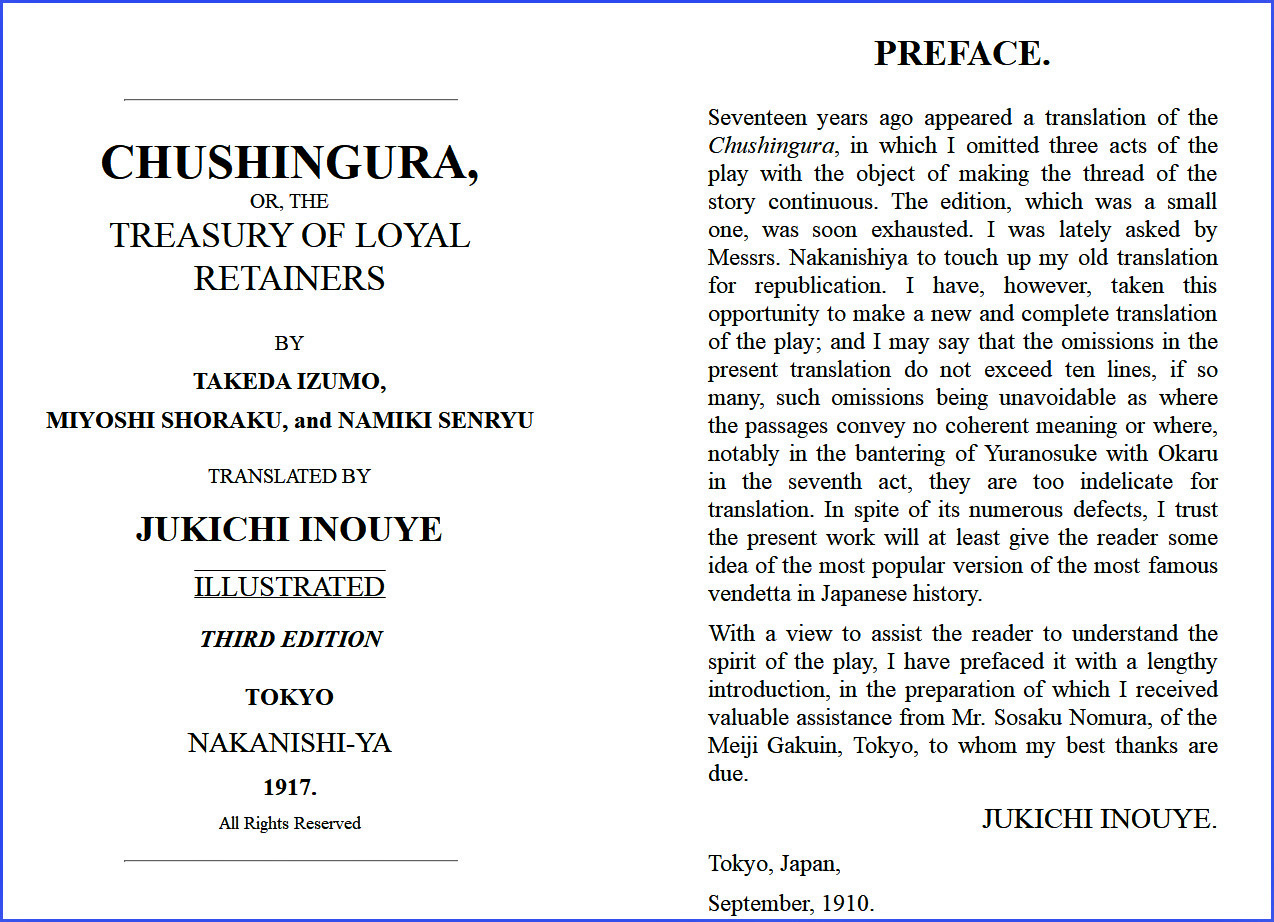
In the introduction to his translation of the famous play “Kanadehon Chushingura” (仮名手本忠臣蔵, also known as “The Revenge of the 47 Ronin”), the translator Jukichi Inoue describes the social situation in Japan around 1700. He addresses Western readers in particular.
We thus learn how a Japanese author in 1910 viewed his own country’s recent and more distant past.
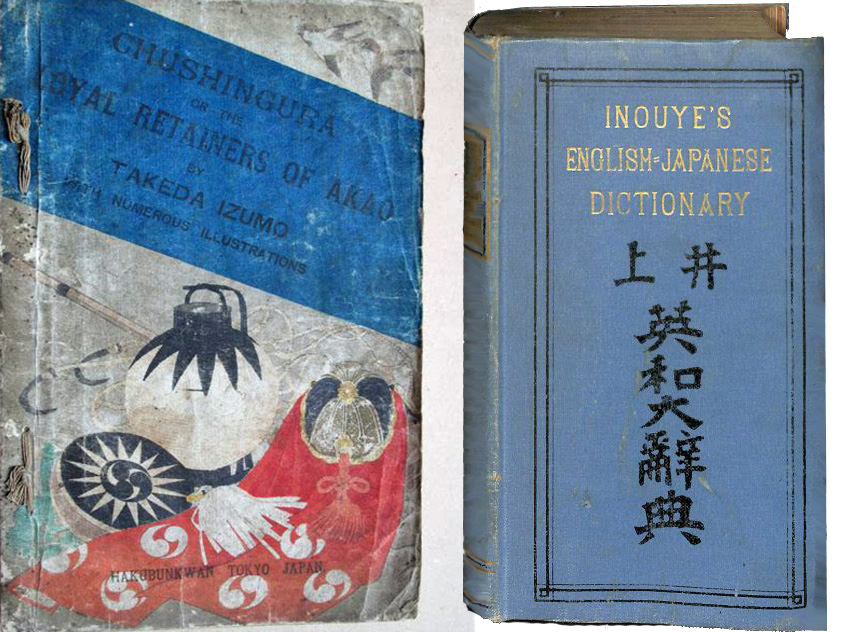
Inoue uses the Japanese spelling of the time, when the syllable ‘ye’ was still in use. Today, the author’s name is no longer written as ‘Inouye’ but as ‘Inoue’, just as the old spelling ‘Uyeshiba’ has become the modern spelling ‘Ueshiba’.
Jukichi Inoue

Jukichi Inoue (井上十吉, 1862–1929) was a Japanese English scholar, engineer, teacher and government official of the Meiji era.
On the orders of his feudal lord, he enrolled at Keio University in Edo in 1871. After graduating in 1873, he accompanied his former feudal lord, Hachisuka Shigeaki, as one of seven selected students to study abroad in England. He was the youngest member of the group.
From 1873, he attended a primary school in London and subsequently various elite schools. He was recognised for his academic achievements. In 1879, he began his studies at King’s College London and transferred to the Royal School of Mines in 1881, where he studied mining and metallurgy.
In 1883, he returned to Japan and was employed as an engineer at the Innai Silver Mine.
The following year, he became a research assistant at the Faculty of Science at the University of Tokyo. In 1886, he became a teacher at the First Higher Secondary School, initially teaching mathematics, but switched to teaching English due to his limited knowledge of Japanese. He retired in 1893.

He subsequently worked as a reporter for the Yokohama Japan Gazette. In 1894, he joined the Ministry of Foreign Affairs as a translator. Around this time, he began to publish numerous works in English, as well as translations from Japanese. From 1898 onwards, he was posted abroad, including to Belgium, the United States and Sweden.
In 1918, he retired to devote himself to writing. In 1921, he published the ‘Inoue Japanese–English Dictionary’ and compiled over ten further dictionaries. He also published the first English textbook. Furthermore, he devoted himself to promoting Japanese culture and translated numerous works into English, such as the ‘Kanadehon Chushingura’.
Source: Jap. Wikipedia

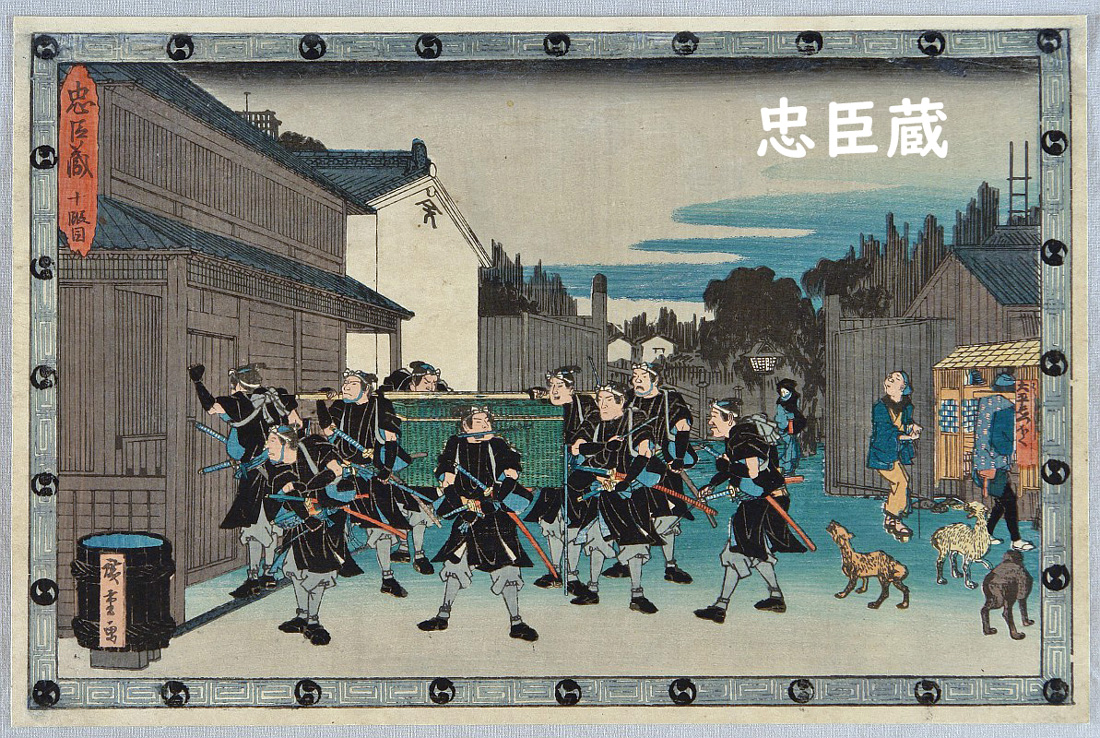
Kanadehon Chūshingura (仮名手本忠臣蔵)


‘Treasury of Loyal Retainers’ is a Bunraku puppet play dating from 1748. It tells the ‘Story of the 47 Ronin’ and is one of the most popular Japanese plays.
On 20 March 1703, 46 rōnin were sentenced to seppuku by the shōgun. (The 47th was away at the time and was later pardoned.) Two weeks later, a Kabuki play about these events premiered in Edo, but was immediately banned by the authorities.
In 1706, the great playwright Chikamatsu wrote a puppet play based on the story. However, the plot was set in the 14th century and the names of the characters were changed.
Three years later, Chūshingura, written by Takeda Izumo, Miyoshi Shoraku and Namiki Senryu, premiered in the Kyoto-Osaka region. Censorship was evidently less strict in this region far from Edo.
The play was an instant success and was quickly imitated countless times. Between 1706 and 1748, new versions appeared every year.

1 THE PECULIARITIES OF THE JAPANESE LANGUAGE

Jukichi Inoue writes in the introduction to his translation:

Language, the vehicle of thought as it is, conveys not unfrequently different impressions to different persons; especially is this the case when that language is not the hearer’s mother tongue. We may take in the general drift of what is said to us in a foreign tongue, but fail to understand the meaning which lies hidden beneath the surface.
In reading a novel we may be unable to discriminate between a national characteristic and a personal idiosyncrasy; the rhythm and cadence of poetry may appeal to us in vain; and we may take too seriously humourous language and mistake the vulgar and coarse for the refined and elegant.
The Japanese language, which comes of a stock totally different to the Indo-European languages, has grown in a state of almost complete isolation, and in course of time, developed characteristics of its own. One of these is the abundance of vowel-sounds, for the consonants are almost invariably accompanied by vowels. Another is the frequency with which connective enclitics occur in a sentence.
The Japanese is an agglutinative language, and the repetition of meaningless form-words naturally deprives the language of force and allows of little change in the order, of speech. Although there are other characteristics, the frequency of enclitics and form-words and abundance of vowels in individual words are the most important.
It is hardly necessary to dwell here upon the difficulty of translating a joruri, or semi-lyrical drama, like the Chushingura, especially as it abounds in word-plays.
In the phonetic system of the Japanese language, which has a comparatively few consonantal sounds, such sounds being, as has already been stated, seldom unaccompanied by vowels, the variety of syllables is small and so, accordingly, is the number of their combinations, with the result that there is an abundance of homonymous words. The identity or similarity of sound is utilised to produce words that may be taken in more senses than one. Often, also, sentences that sound sweet and graceful are taken wholesale from literature of a former age and inserted so skilfully that one fails to detect any incongruity in the mosaic so formed; and yet, unless one is versed in the literature which has been drawn upon, it would be difficult to make out the drift of the passages in which they occur.
These peculiarities are not, it is true, confined to joruri, for they may be found in all other works of lyrical nature; but they give a characteristic charm to joruri, and make it a very difficult task to translate a joruri into a European language.
Thus, the eighth act of the Chushingura, which is made up of sentences and phrases of this description, fails to convey much meaning when translated into English.

... will be continued.


Remarks

Kanadehon Chūshingura

仮名手本忠臣蔵
Kanadehon literally translates as ‘exercise book 手本’ for ‘Kana 仮名’ (such as Hiragana)
Chūshingura means ‘loyal 忠’, ‘retainers 臣’, ‘treasury 蔵’

The unusual title Kanadehon may be due to the authors’ poetic licence, may simply serve to confuse the authorities, or may refer to a work of poetry unknown to Western readers.
Today, the play is usually referred to simply as Chūshingura.

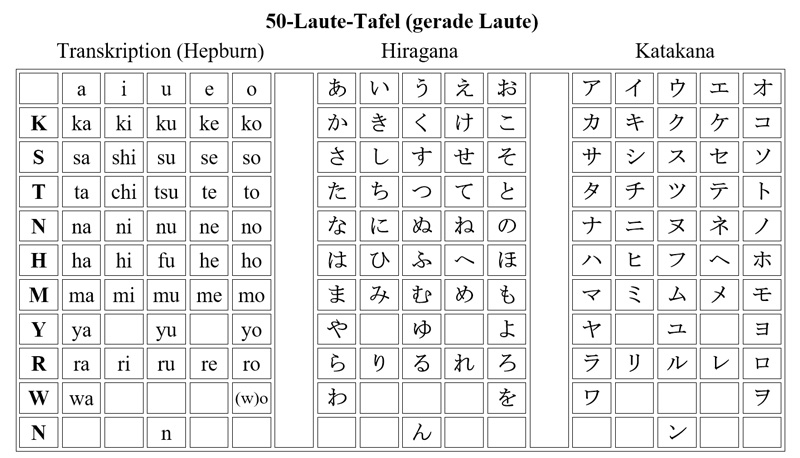
The Japanese phonetic system

Using the basic hiragana and katakana charts as examples.
The only standalone consonant is ‘n’; all other syllables are combinations of consonants and vowels.

Enclitics

A clitic is a term from linguistics referring to an unstressed or weakly stressed morpheme that is less independent than a word, as it must phonetically align with an adjacent stressed word.
English enclitics include the contracted versions of auxiliary verbs, as in "I'm" and "we've". Some also regard the possessive marker, as in "The King of England's crown", as an enclitic, rather than a genitival inflection
A distinction is made between proclitics, which attach to the following word, and enclitics, which attach to the preceding word.
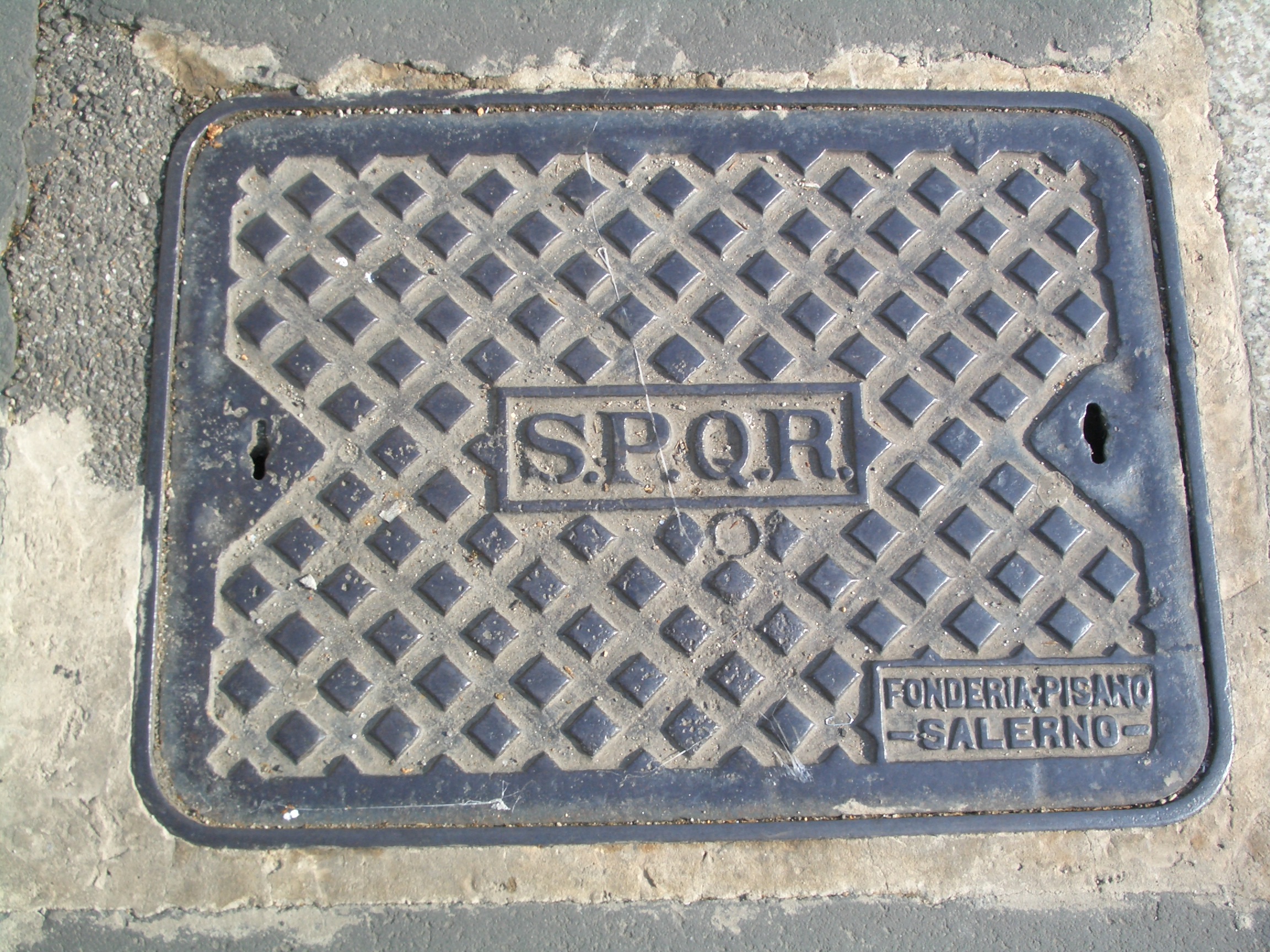
A very old enclitic, which may be familiar to scholars of Latin and also to tourists in Rome, is the "-que" in: “Senatus Populus-que Romanus” instead of “Senatus et Populus Romanus”, loosely translated as “Senate and People of Rome”. The abbreviation SPQR can be found on manhole covers in Rome.
The numerous enclitics in Japanese, to which Inoue refers, are primarily sentence particles such as “wa”, “ga”, “wo”, “no”, “ni”, “to” etc., which, when attached to a noun, mark the case or function like prepositions.
Example: 田中さん27歳会社員で、東京郊外団地住んでいます。
‘Ms. Tanaka is a 27-year-old office worker who lives in a housing complex in the suburbs of Tokyo.’