Kagamibiraki in Vienna

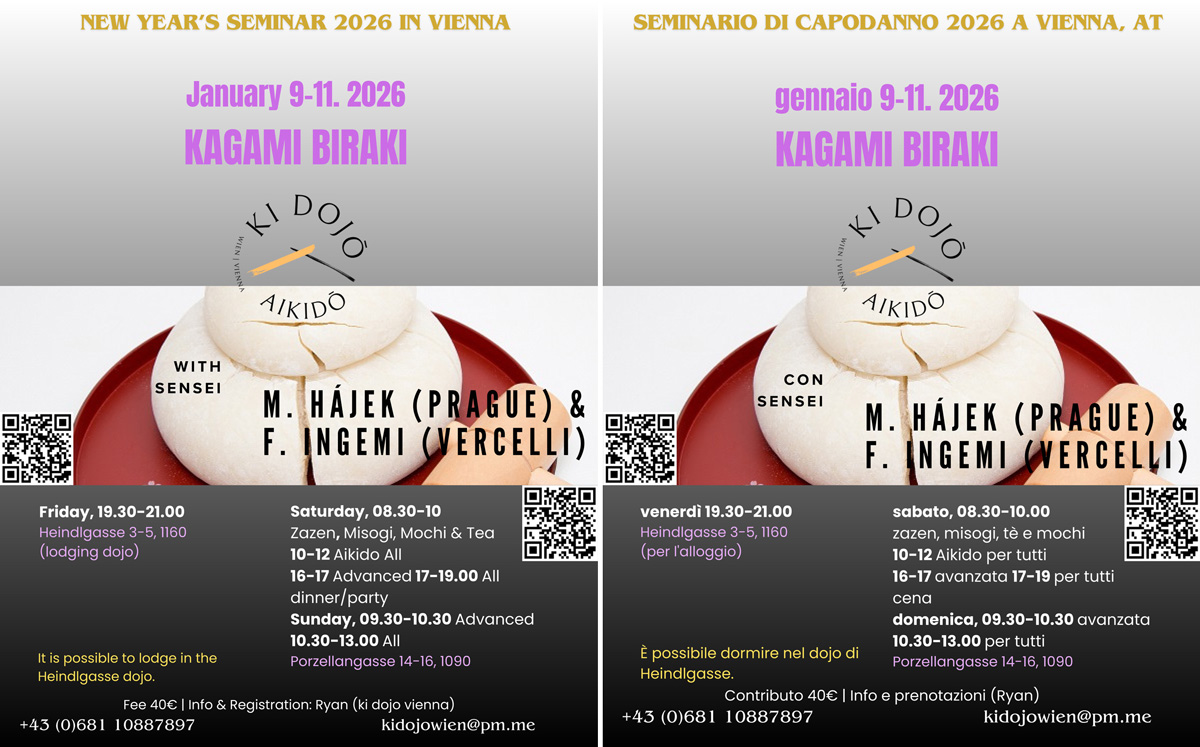
09.01. - 11.01.2026

Report by Ryan Jepson

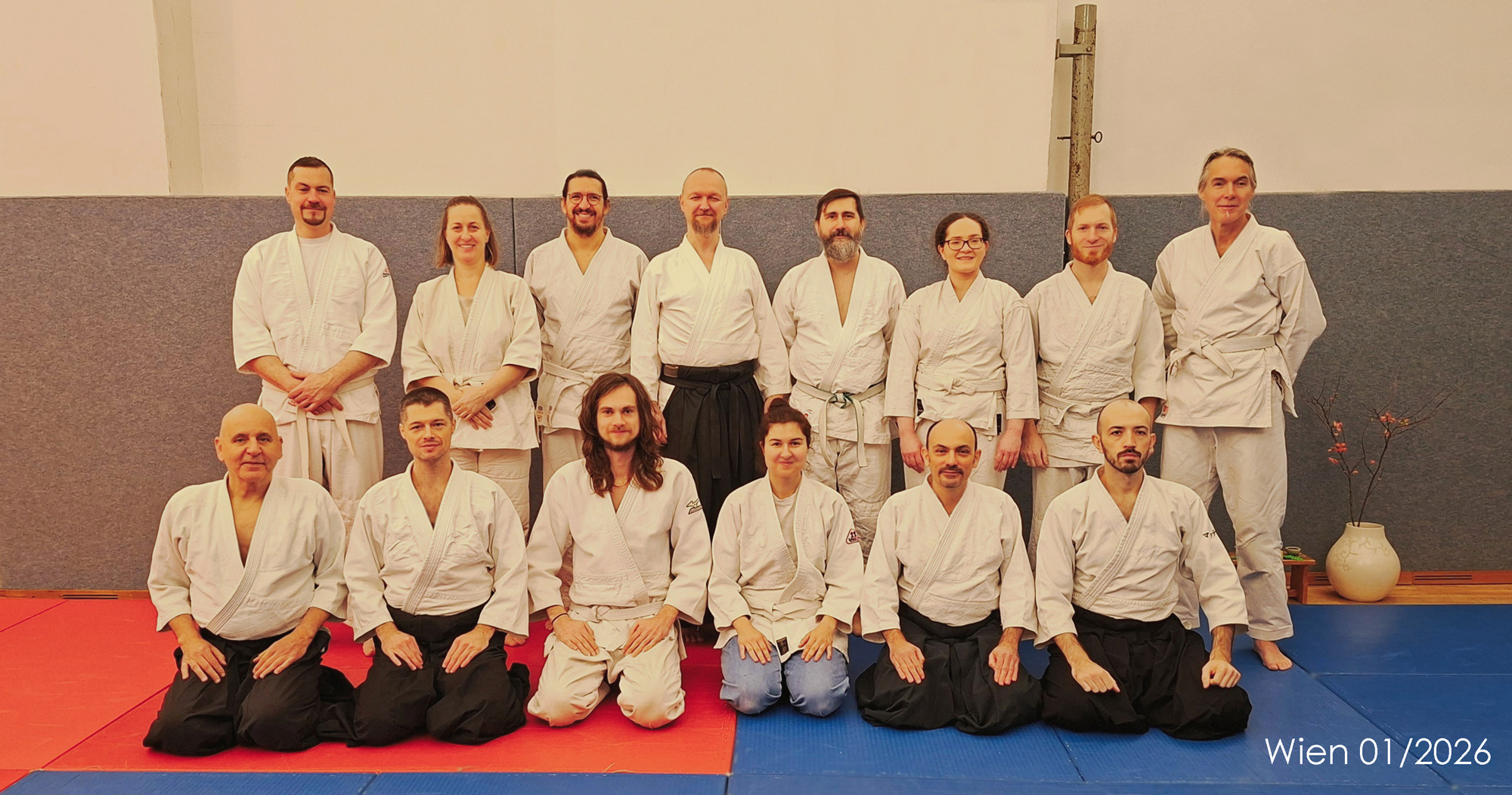
Seminar in Wien 01/2026

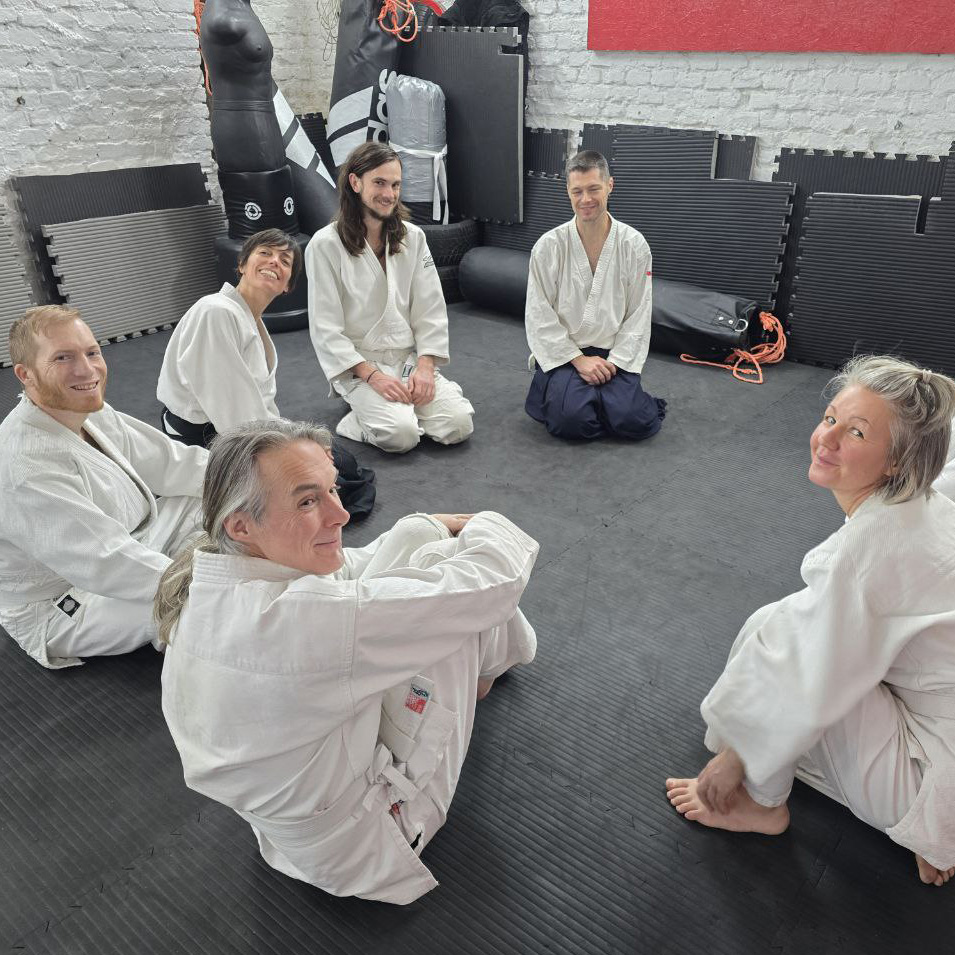
group photo


Vienna January 2026

Bernhard was unable to attend this year, as he and his wife were officially honored at the New Year's reception of their home community Balerna (CH) on the same weekend for their services to Aikido on the occasion of the 25th anniversary of the dojo. As exams weren’t on the agenda, this proved unproblematic. I knew Francesco (and Matteo) from Furusato, Bosco Gurin, Balerna and many other seminars. Hájek sensei has been regular teacher and presence in our dojo for many years.

As the Vienna dojo doesn’t have its own premises, their numerous seminars have been held in various locations across the city. It was decided to keep the same theme and weekend for their 2026 seminar as in 2025: Kagami Baraki, or New Year’s Aikido seminar.
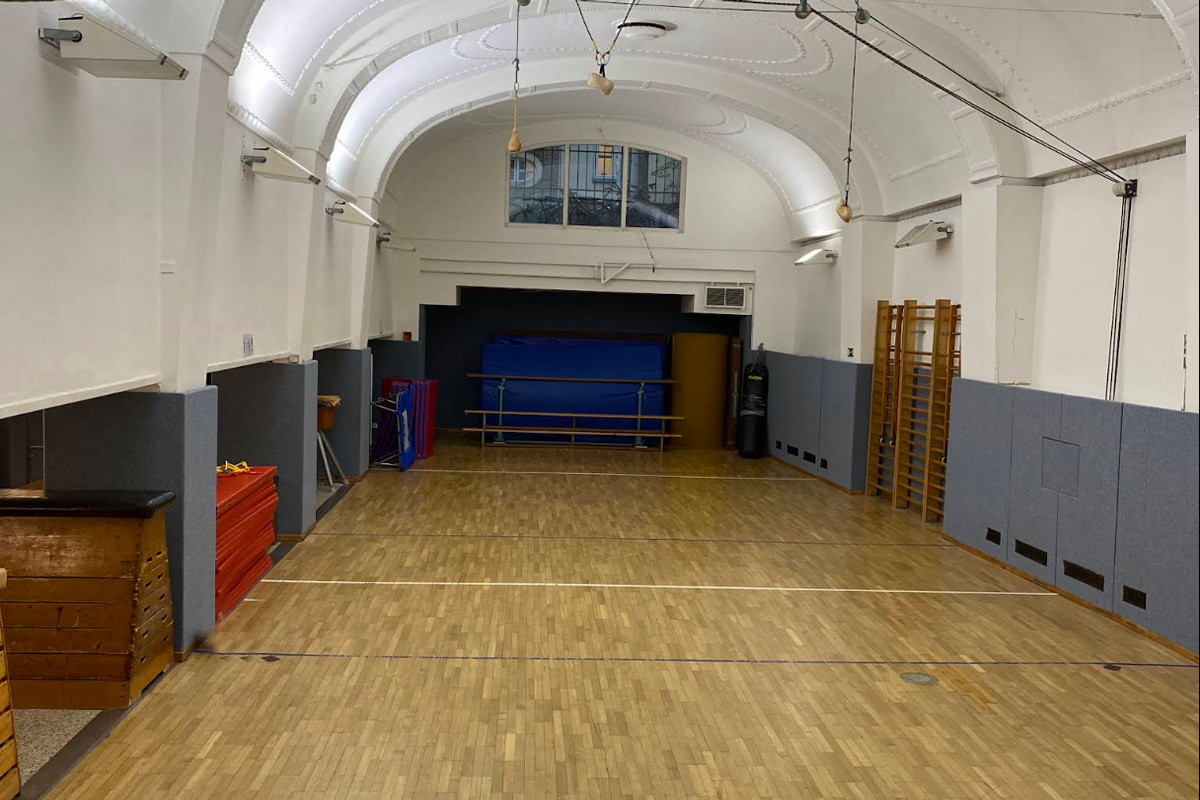
Dojo Porzellangasse

Given the interest last year, a larger space was sought. The Stadtbahnbogen sports centre of the Sport Union had been reserved all year only to be made unavailable at short notice. Fortunately, we were offered another venue in the Porzellangasse 14-16, in Vienna’s historic Serviten Quarter in the 9th district for the weekend which proved suitable. The Karate dojo in the Heindlgasse played host to the Friday evening training and to guests overnighting.

Danube

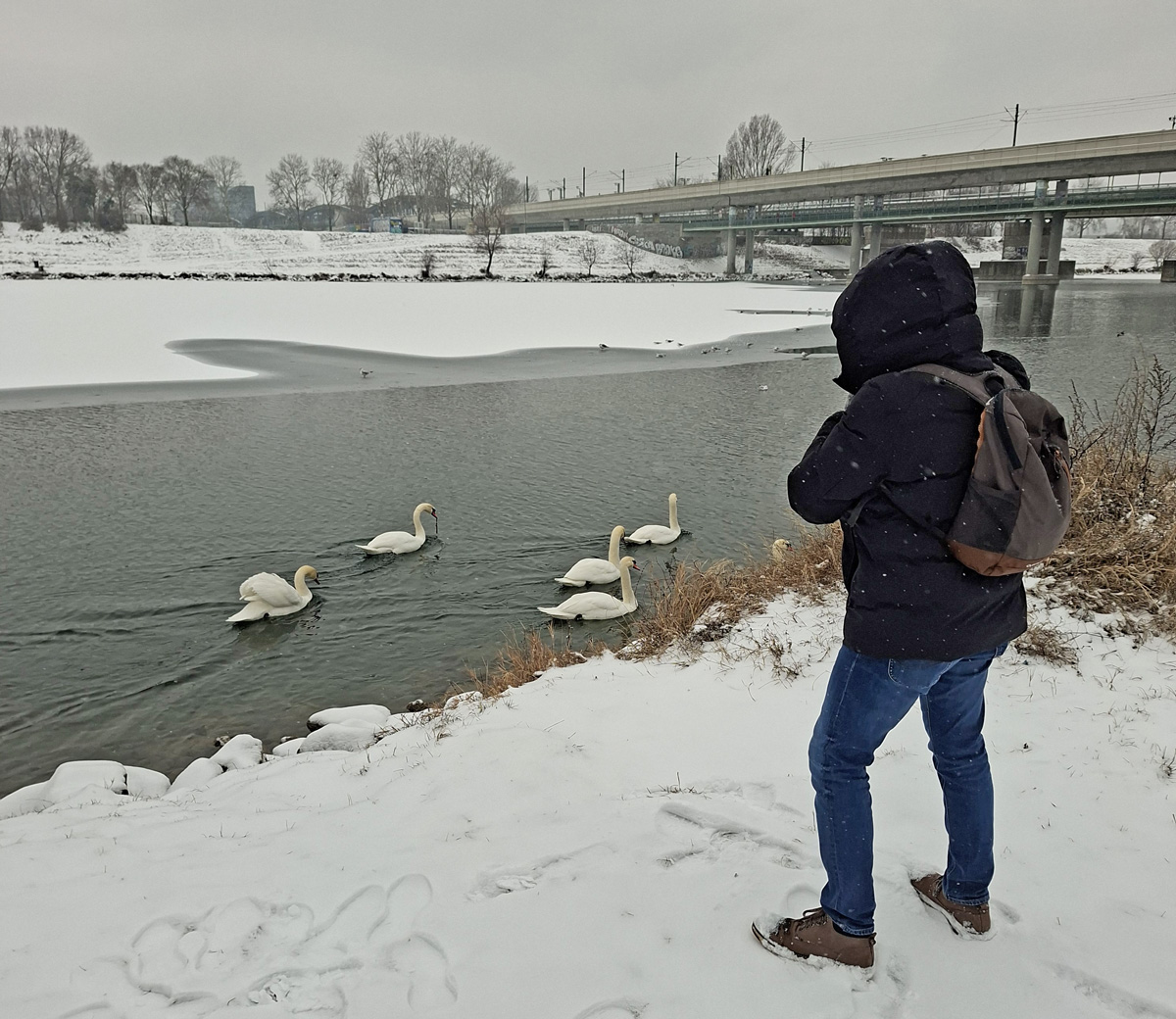
Francesco arrived in Vienna Thursday evening and there was time to visit a local traditional gastropub and brewery. On Friday, we met for a walk along the wintry Danube which had partly frozen over.

We met Matteo at the Neue Donau and walked across to the Alte Donau, technically an Oxbow lake since the regulation of the floodplain and digging of the New Danube stream from 1870-1875, which, also largely frozen, had lured a few people onto the ice. A few people had to be rescued over the weekend after falling through the thin ice.

We then proceeded to have lunch at a traditional restaurant serving Austrian and central European dishes in the “Prager Straße” in the Floridsdorf district.
The area just north of the Danube (locally referred to as “transdanubia”, with a certain undertone) reveals the historic and geographic proximity to Czech (Moravian and Bohemian) lands as signified by road and place names.

Dojo Heindlgasse

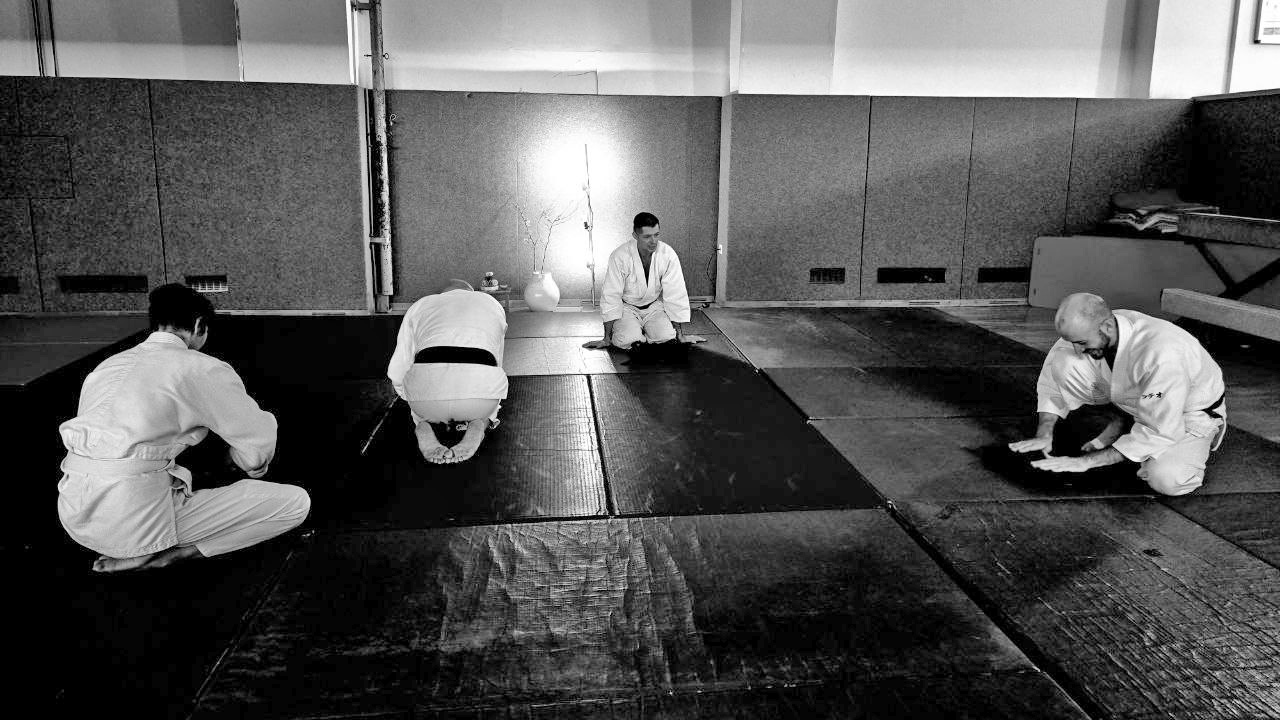
Later in the afternoon extra tatami were transported to the Porzellangasse dojo, and all guests having arrived in time, with the exception of one participant from Vienna who had noted an entirely different and unrelated address in the 1st district, and Marko and Laura who were travelling with the night bus from Zagreb and Erlangen, respectively, practice could open punctually.

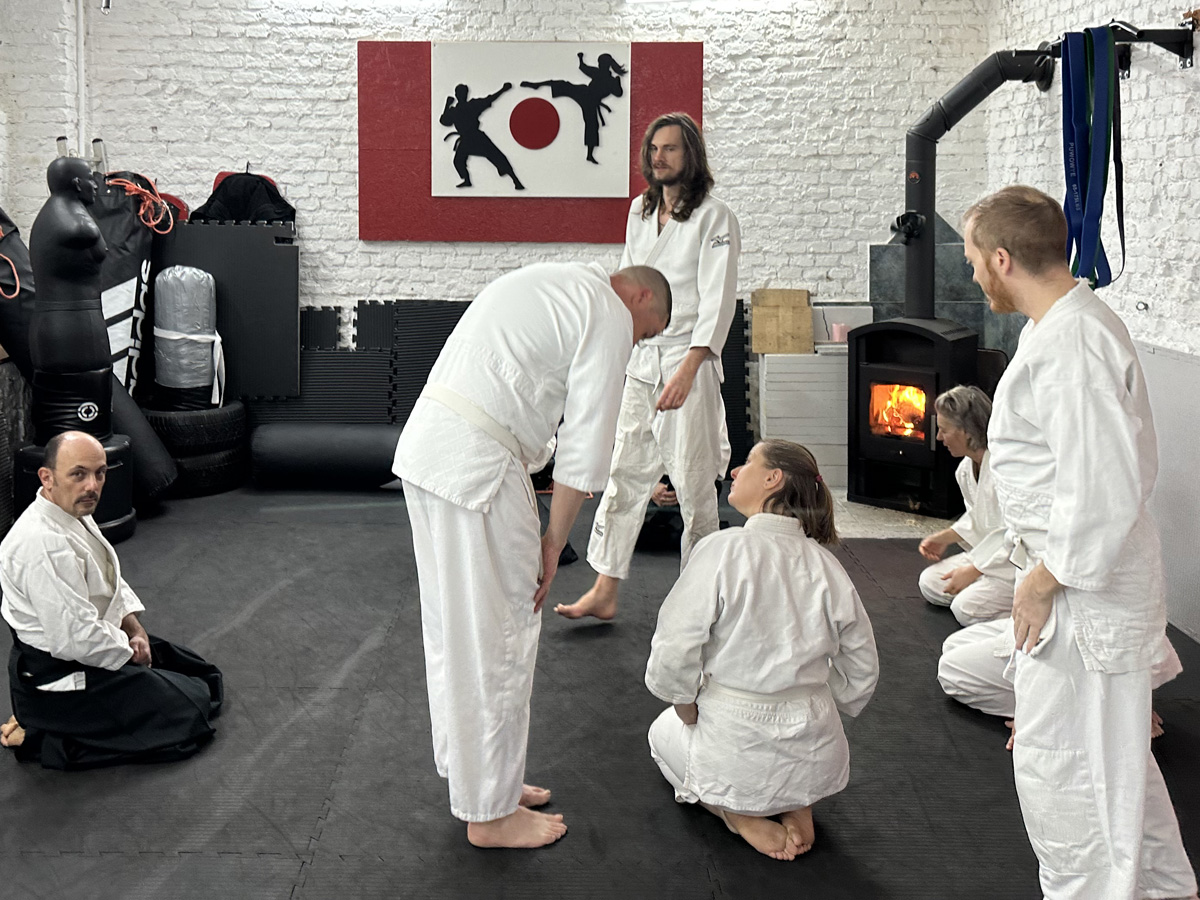
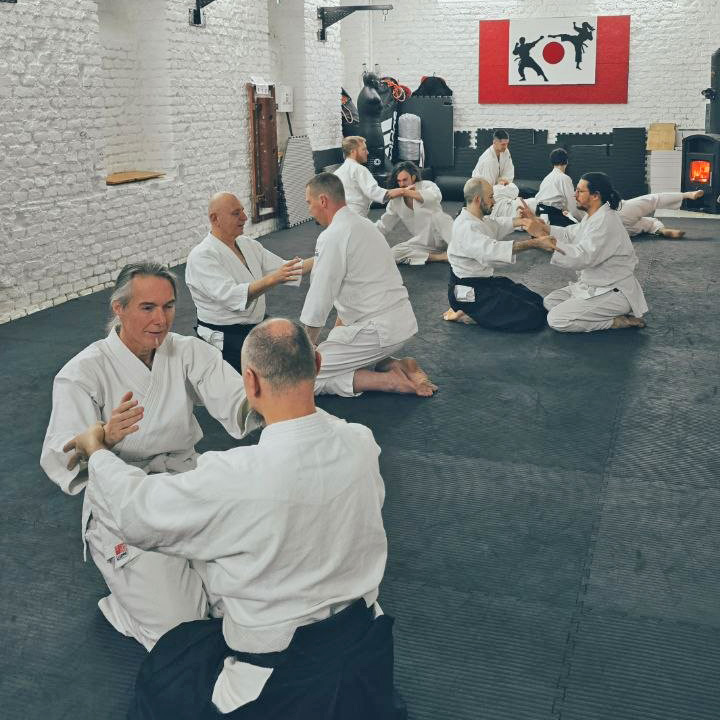
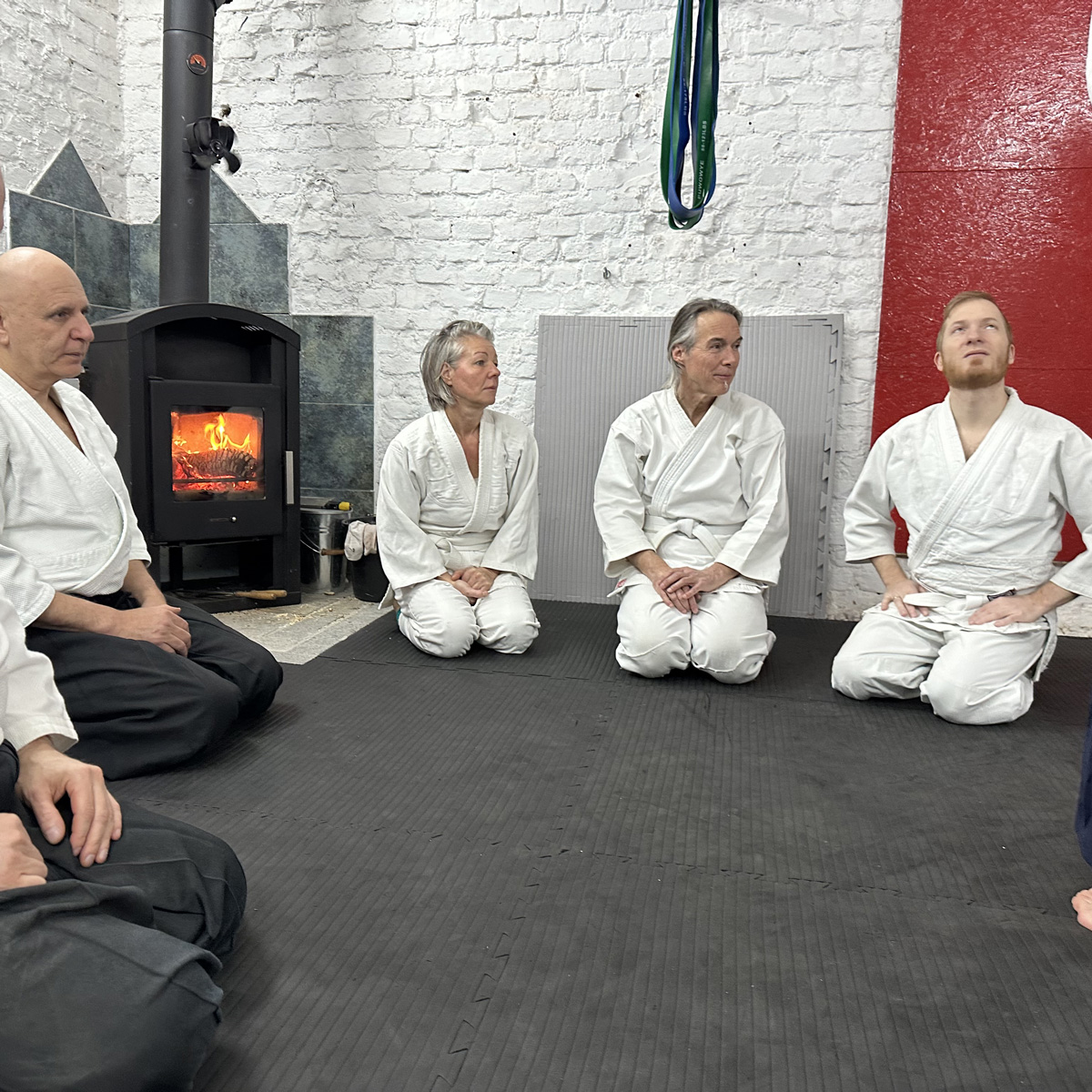
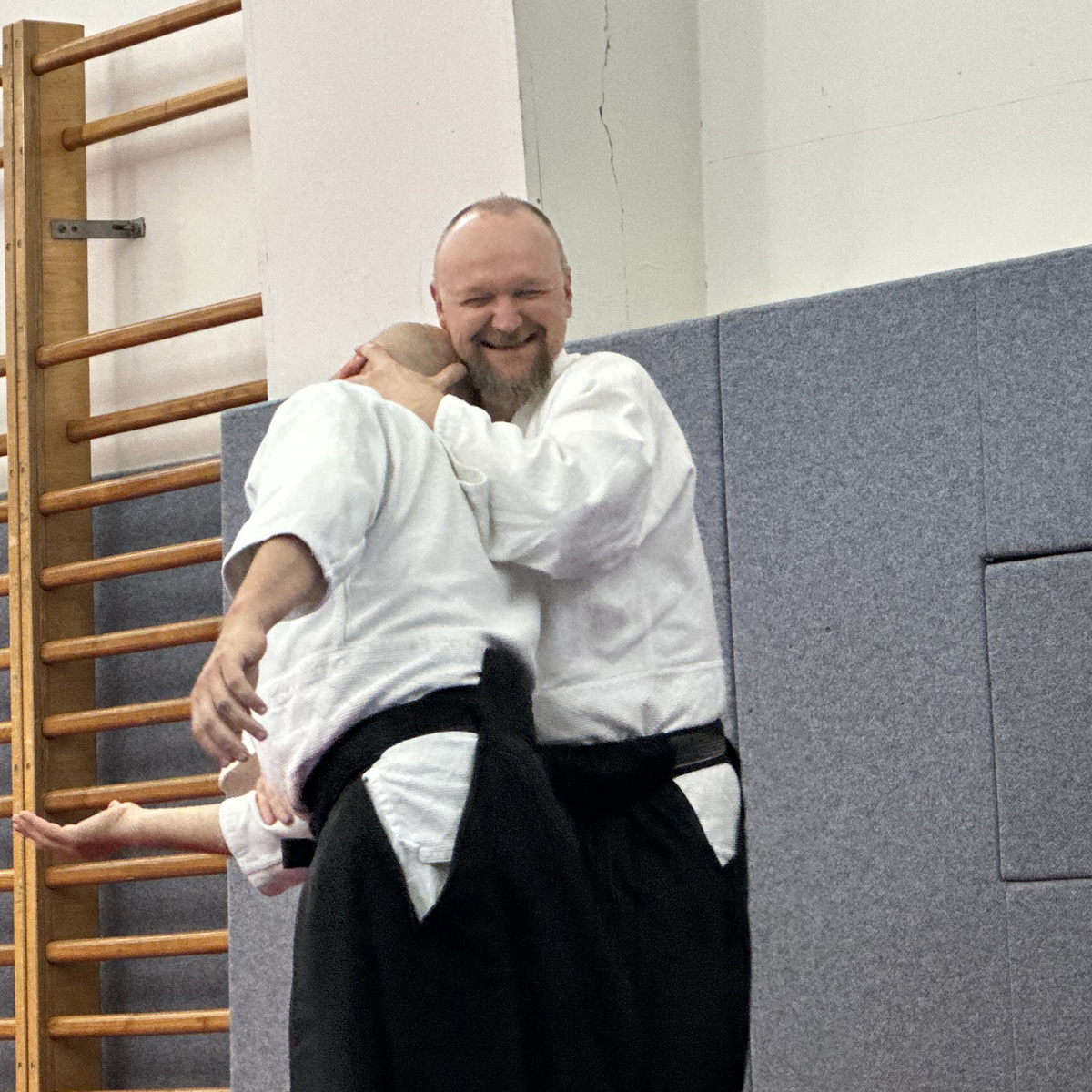
Temperatures had plummeted towards the end of the week and further snow fell around central Europe. The stove in the Heindlgasse was appreciated. Francesco began with stillness referencing the concept of “Mokusou” (黙想). Other topics included correct ukemi and the example of zagi ryotedori kokyunage, and katatedori techniques with a focus on how to connect and create the first relationship with uke.

Saturday morning

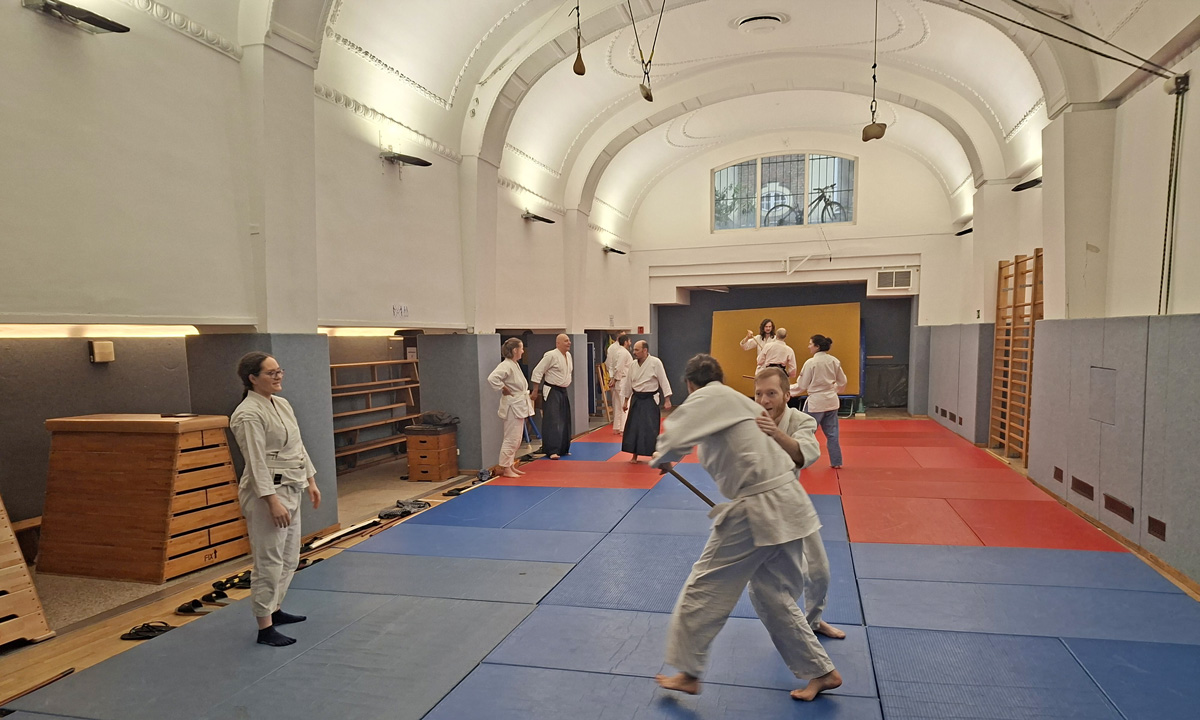
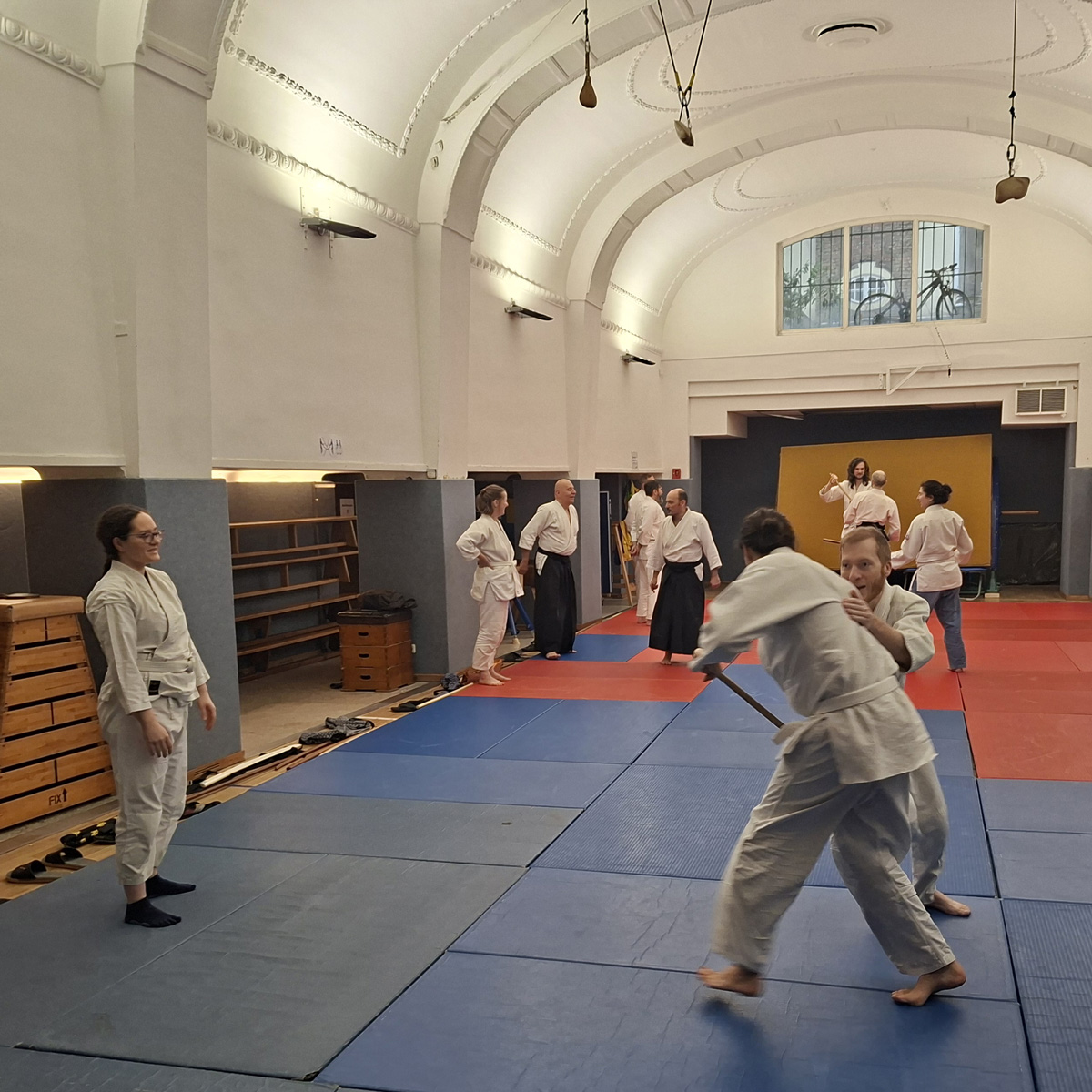
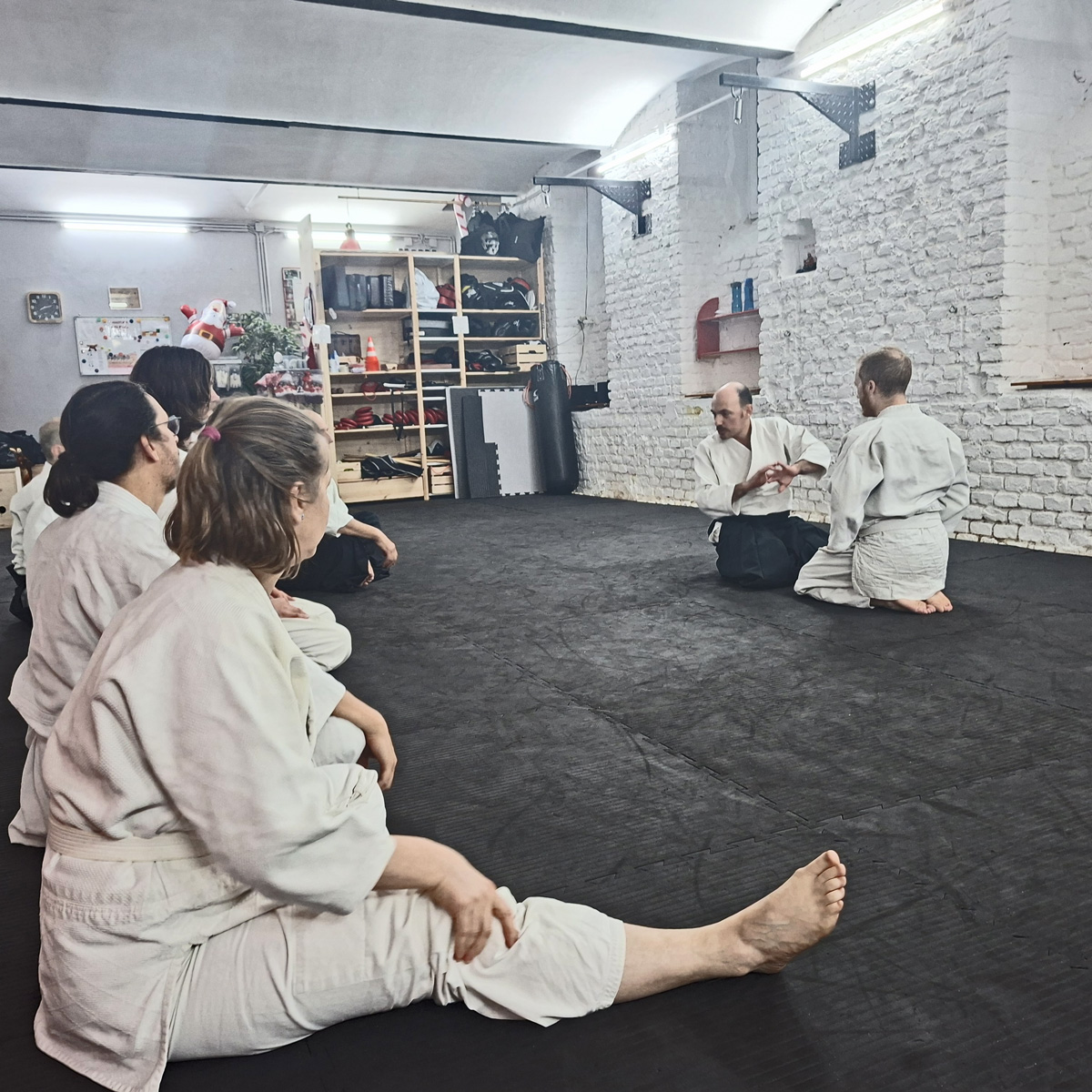
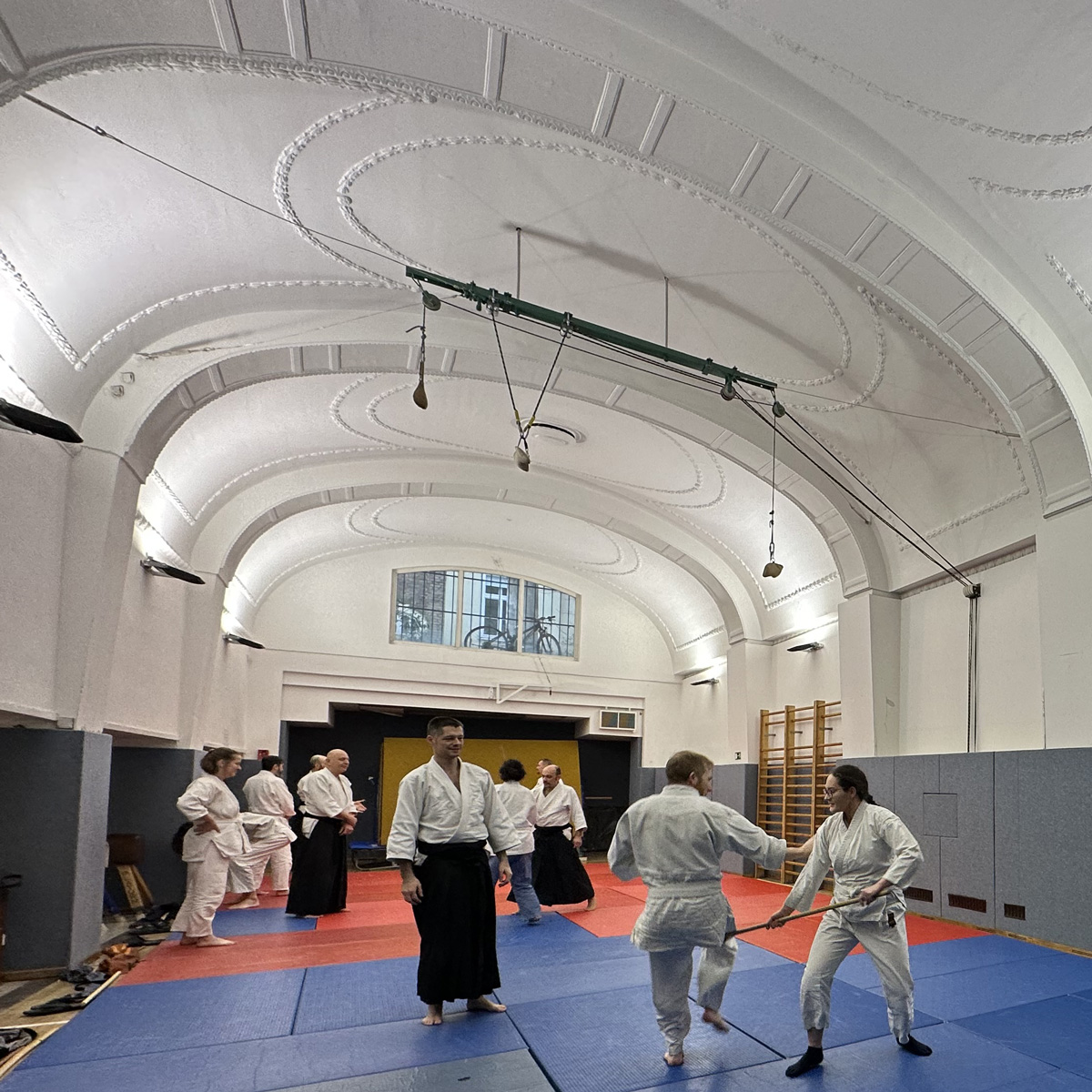
We moved over to the beautiful facility in the Porzellangasse for the weekend where we had laid out around 100 m² of tatami.

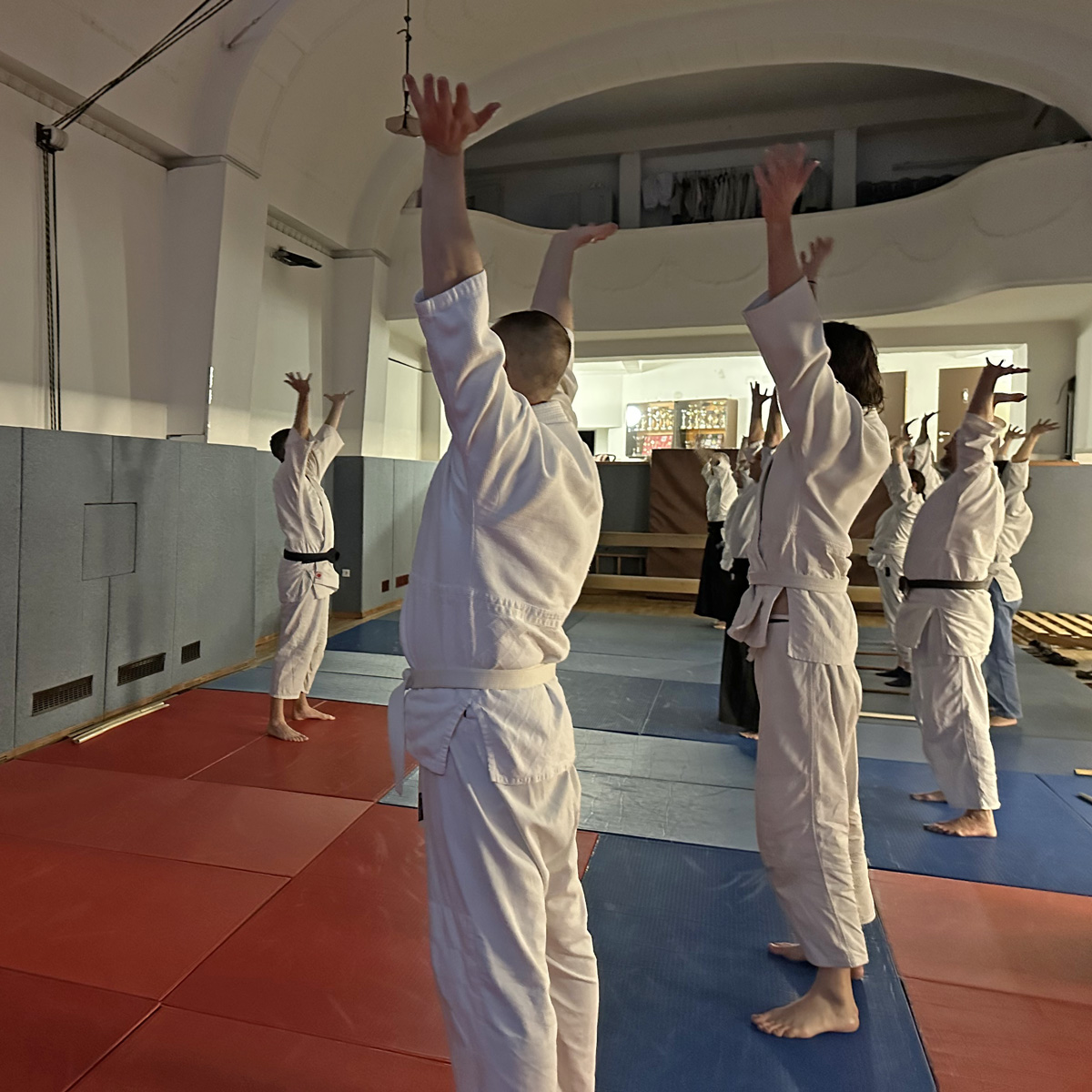
Saturday and Sunday morning began early in the Porzellangasse with Misogi followed by a tea break which included homemade mochi that had been prepared together by several people in Vienna, cake from Karel and Sencha.

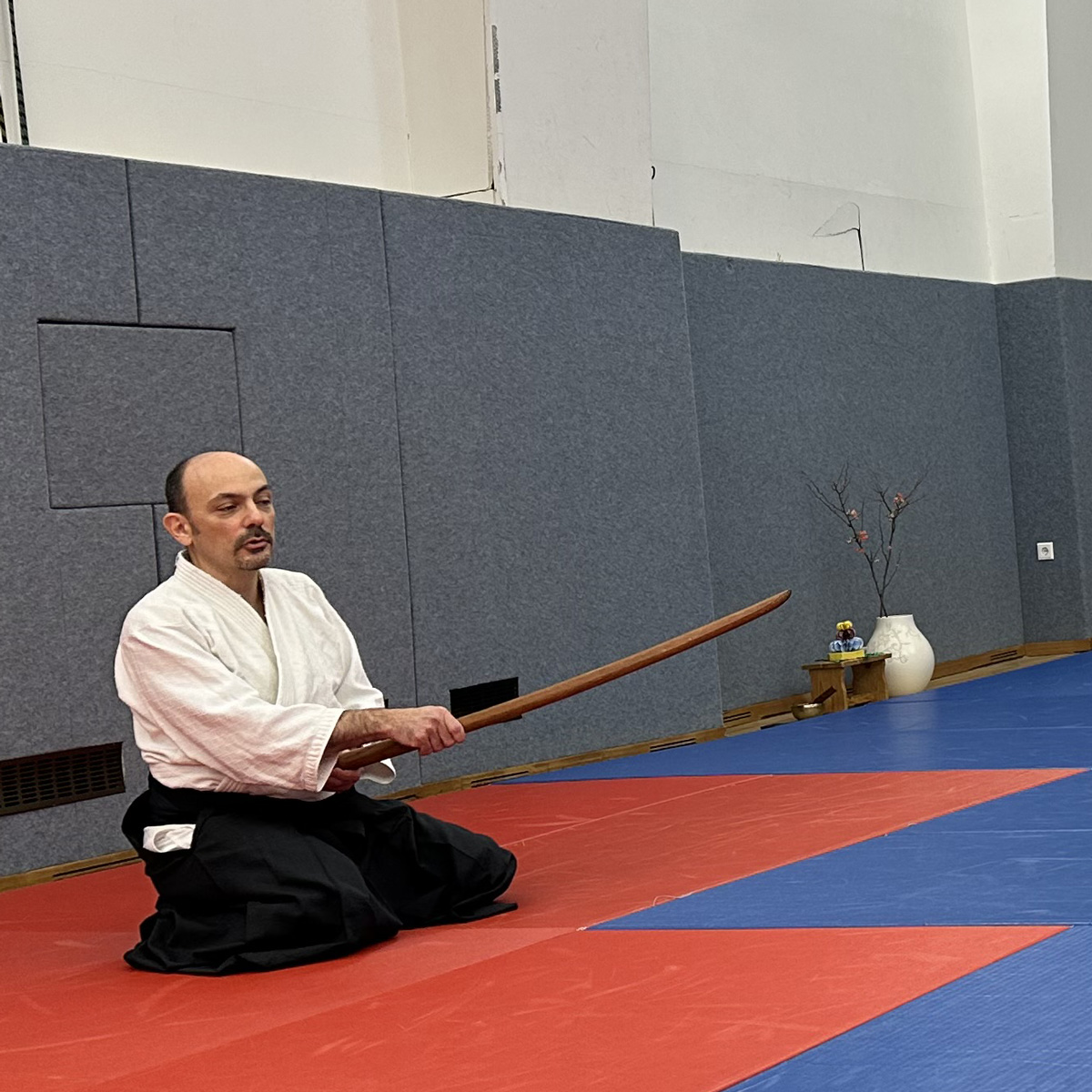
Francesco then continued and led morning training with katatedori and bokken.

Kagami Mochi

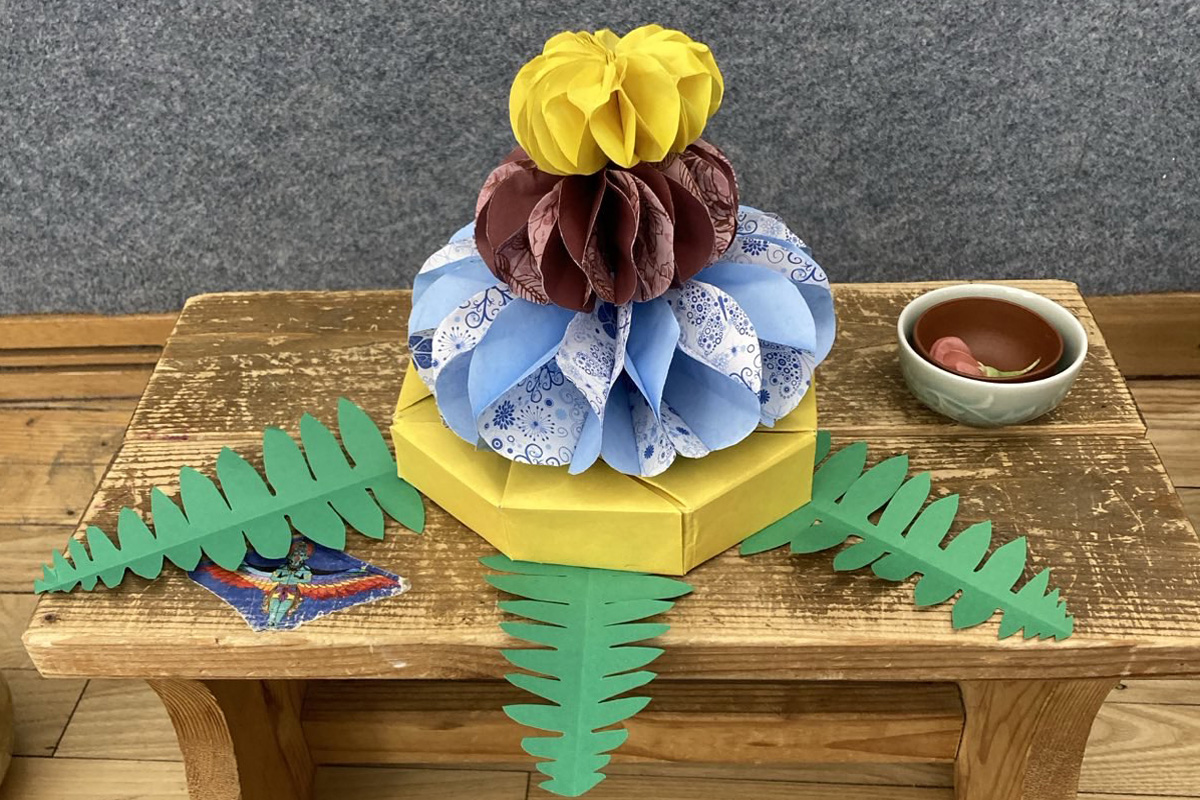
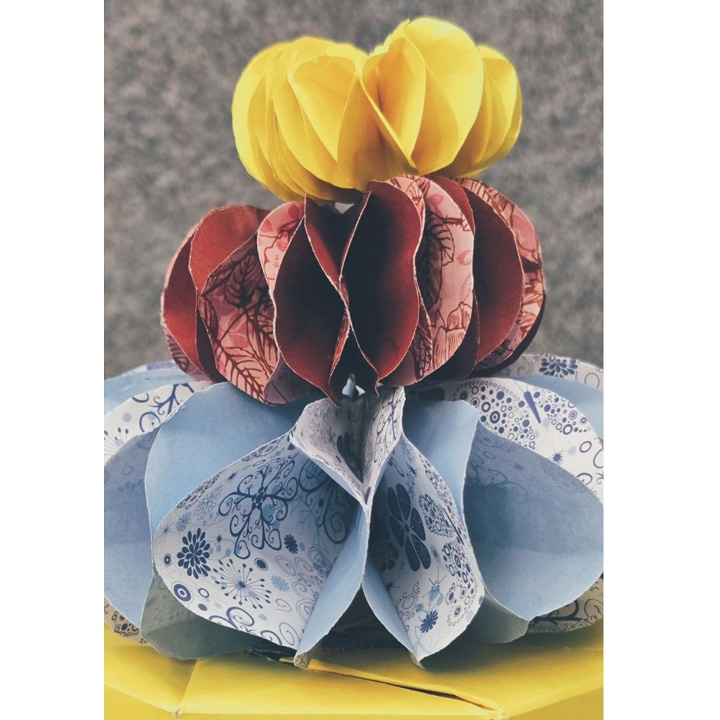
Manja had decorated the shomen with an origami in the form of a kagami mochi.
This usually involves placing a daidai (Japanese bitter mandarin orange) on top of two mochi.
This composition carries a specific symbolism through a play on words.
The Japanese word for "generation" is dai (代). Doubling the word to daidai (代々, the second symbol being the doubling mark) means "generation upon generation." The arrangement is thus meant to symbolize the continuous succession of generations and is a traditional New Year's decoration.

Saturday afternoon

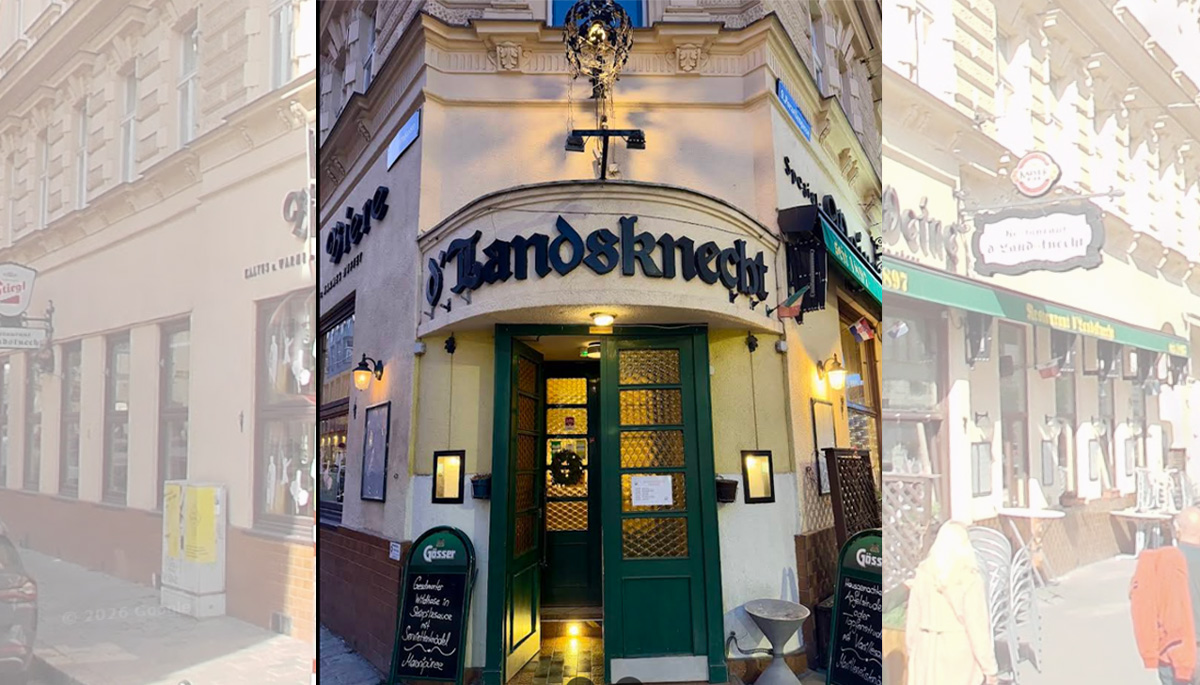
Lunch was taken in an old establishment directly opposite the dojo called "d’Landsknecht" which offered classic Viennese fare. They provided a table large enough to accommodate 13 of us while Max and Maximilian went off to prepare a stew for the evening.
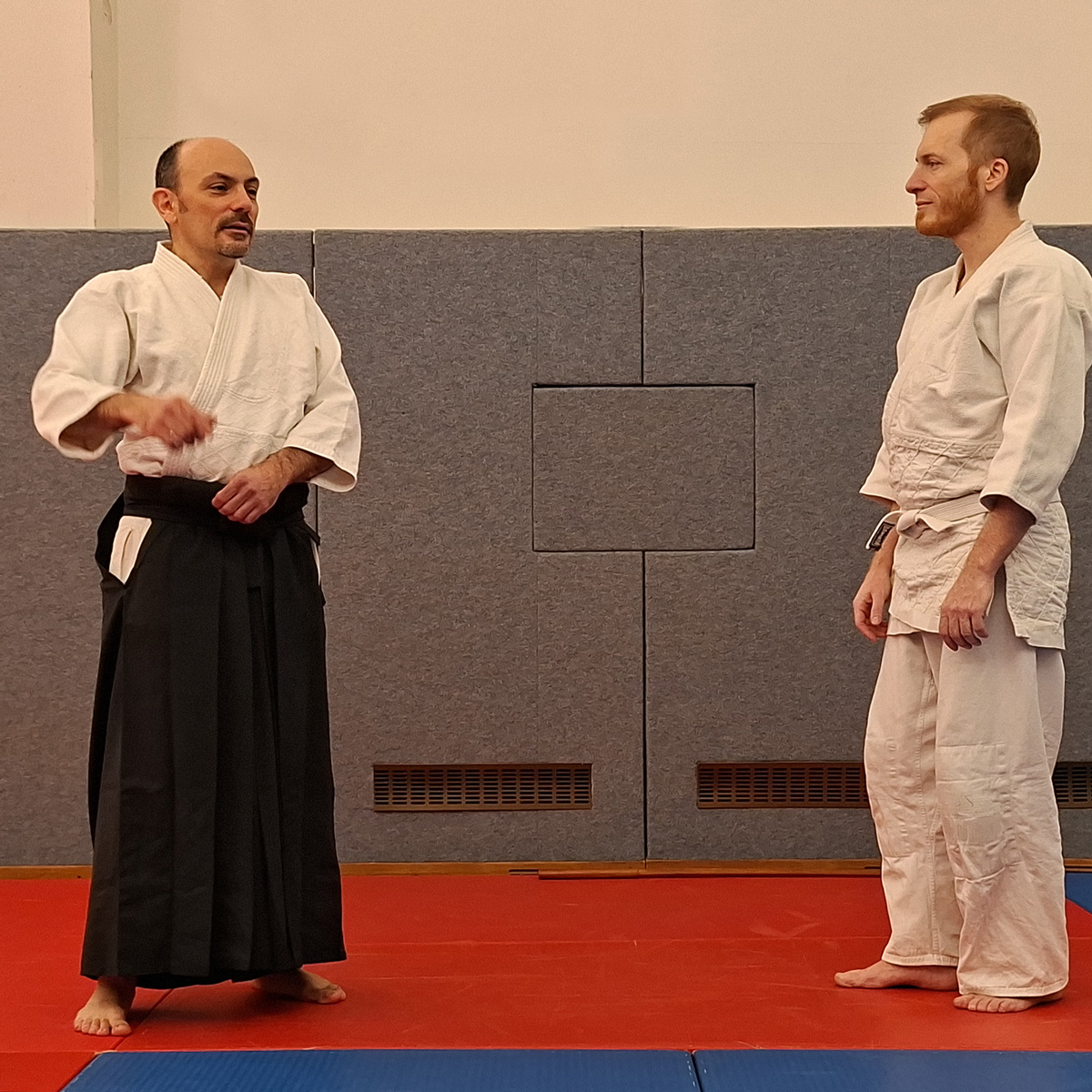
Hájek sensei led the afternoon session and covered Tszukiwaza 11 and 25 as there were several Shodan candidates present.
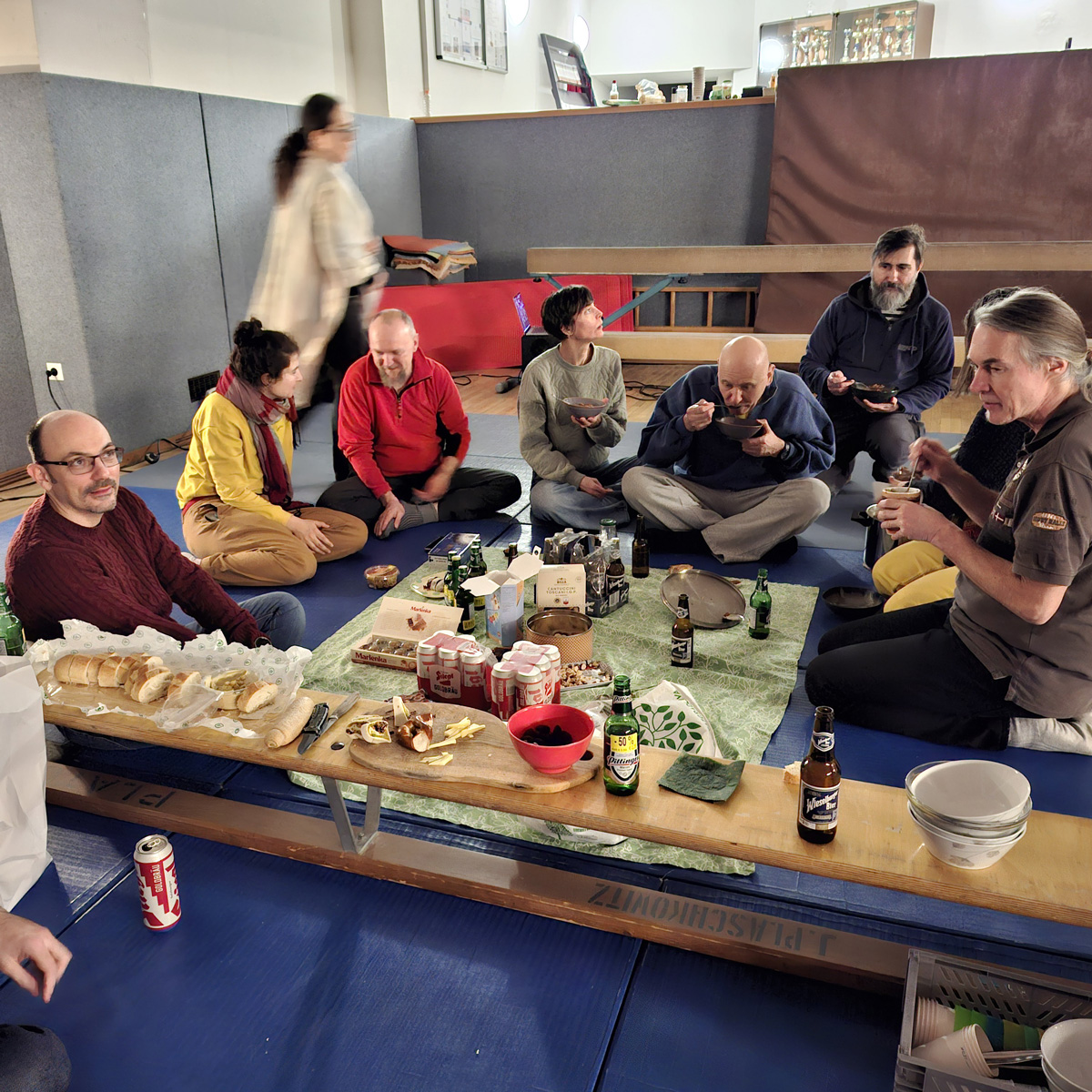
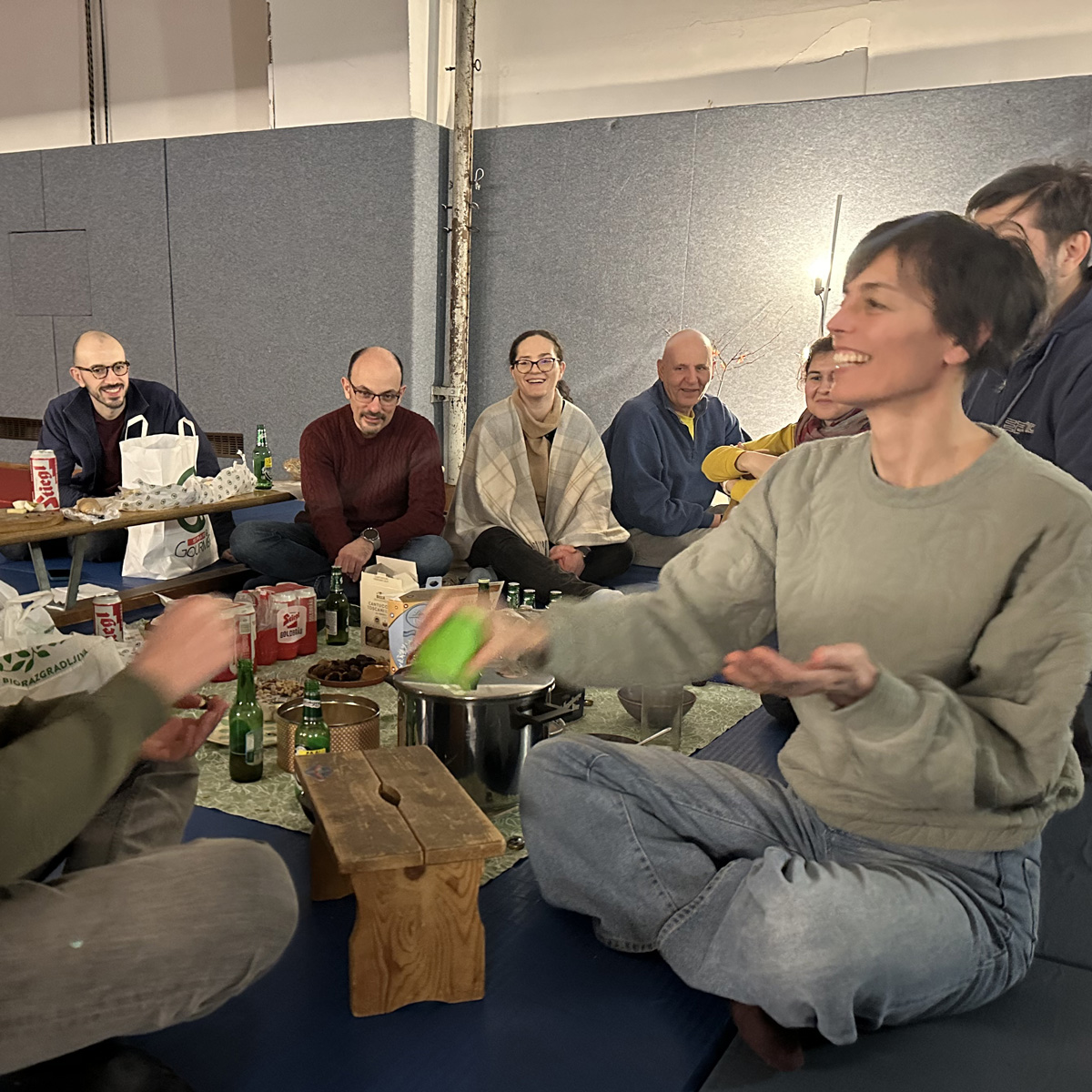
A small party was held in the dojo and thanks to everyones contribution, food, drinks, music and games provided ample merriment. Even a round of the geisha (drinking) game “Konpira Fune Fune” was played.

Sunday

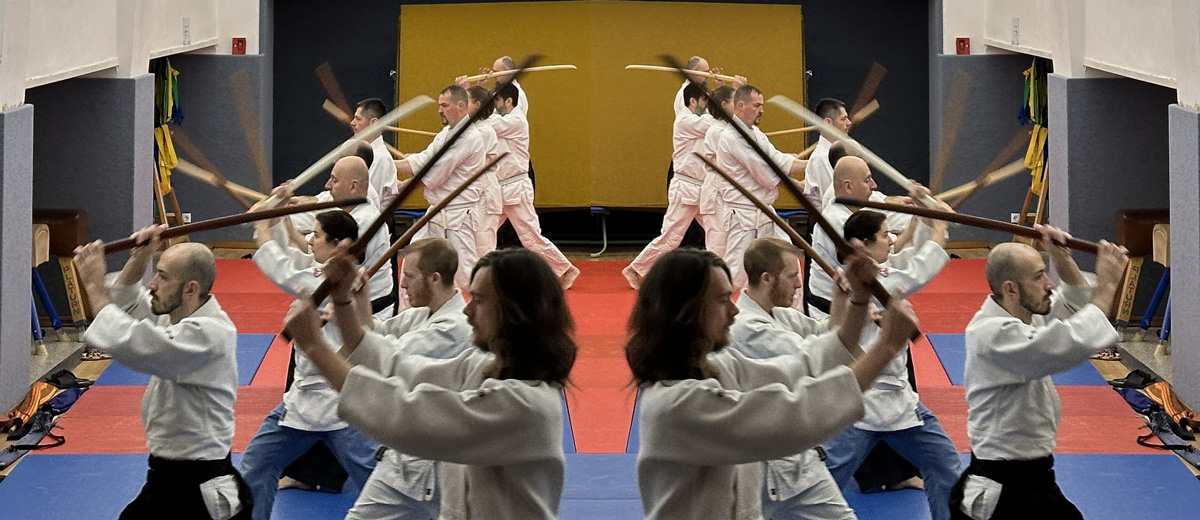
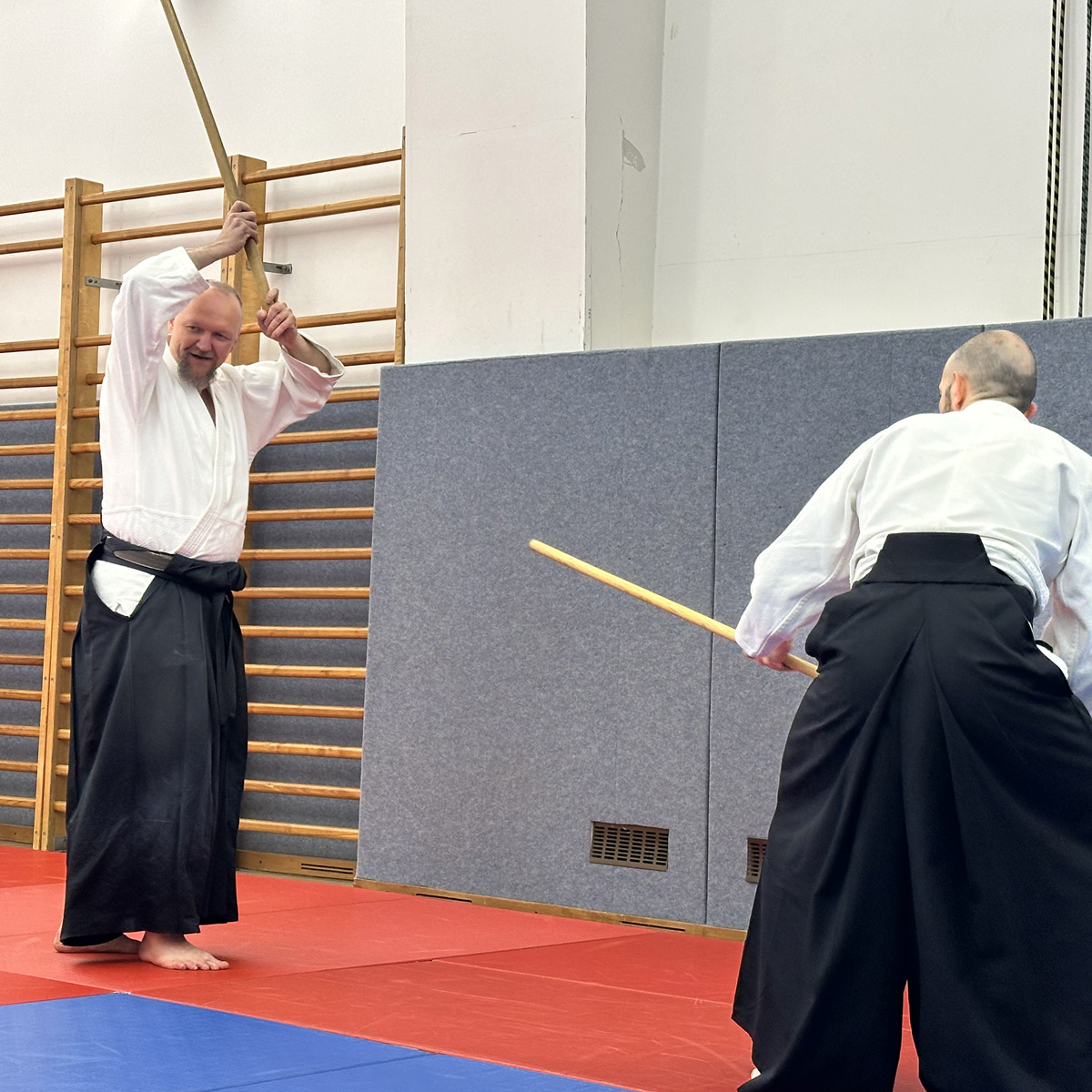
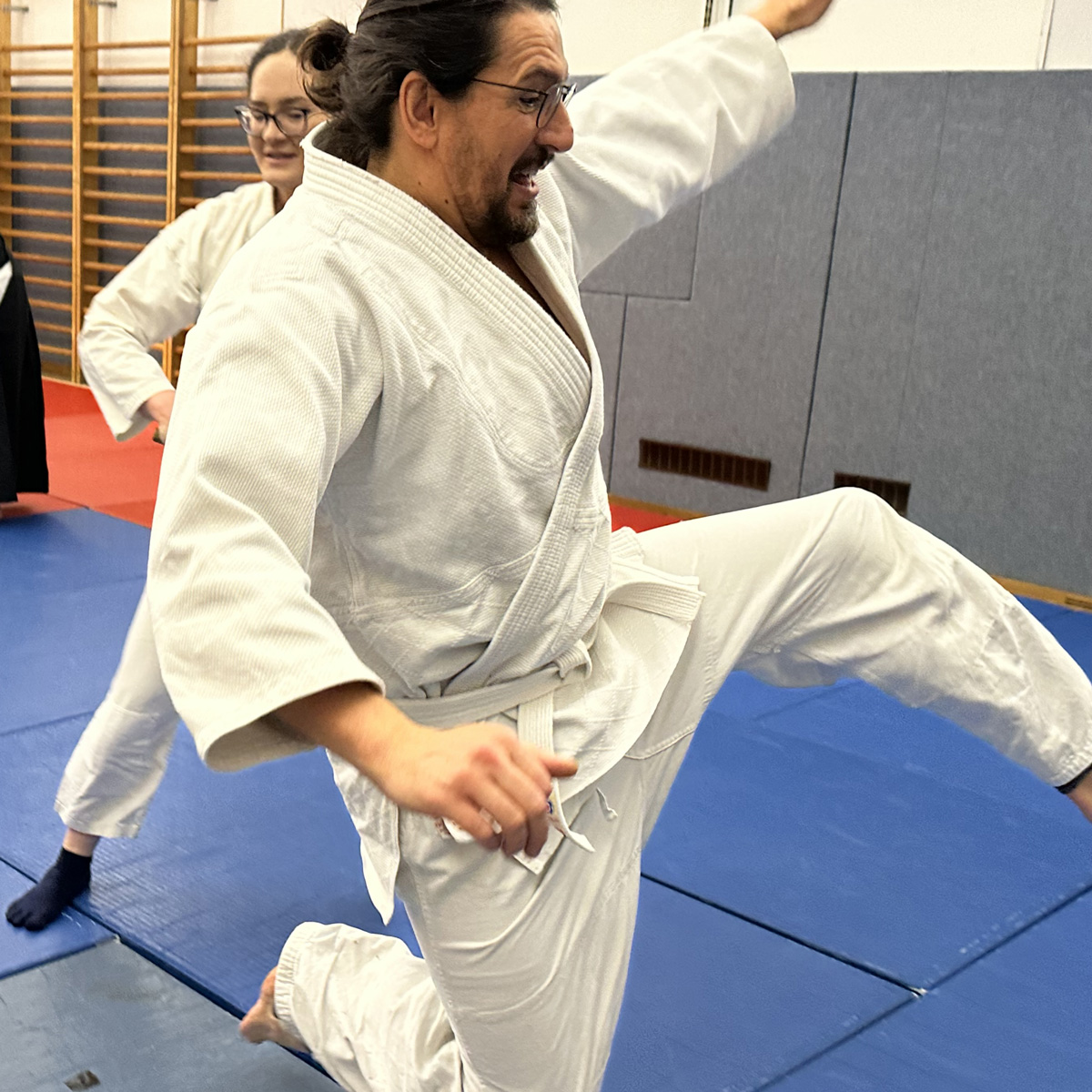
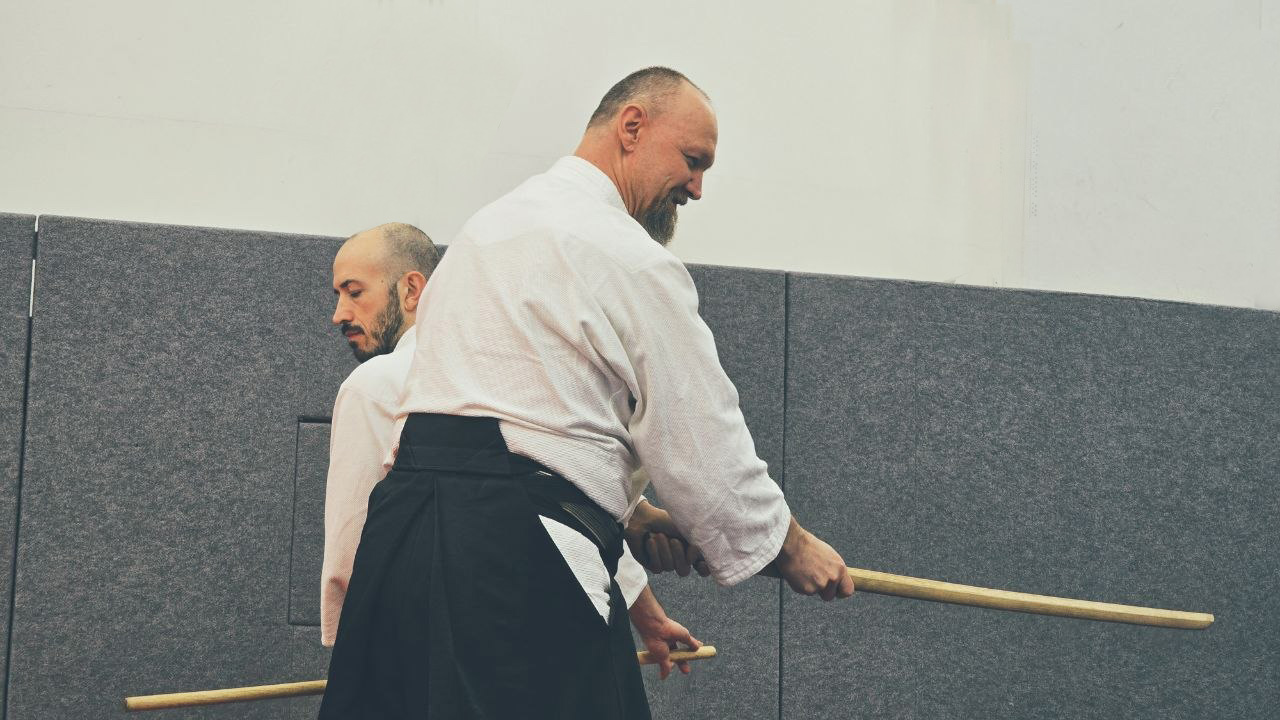
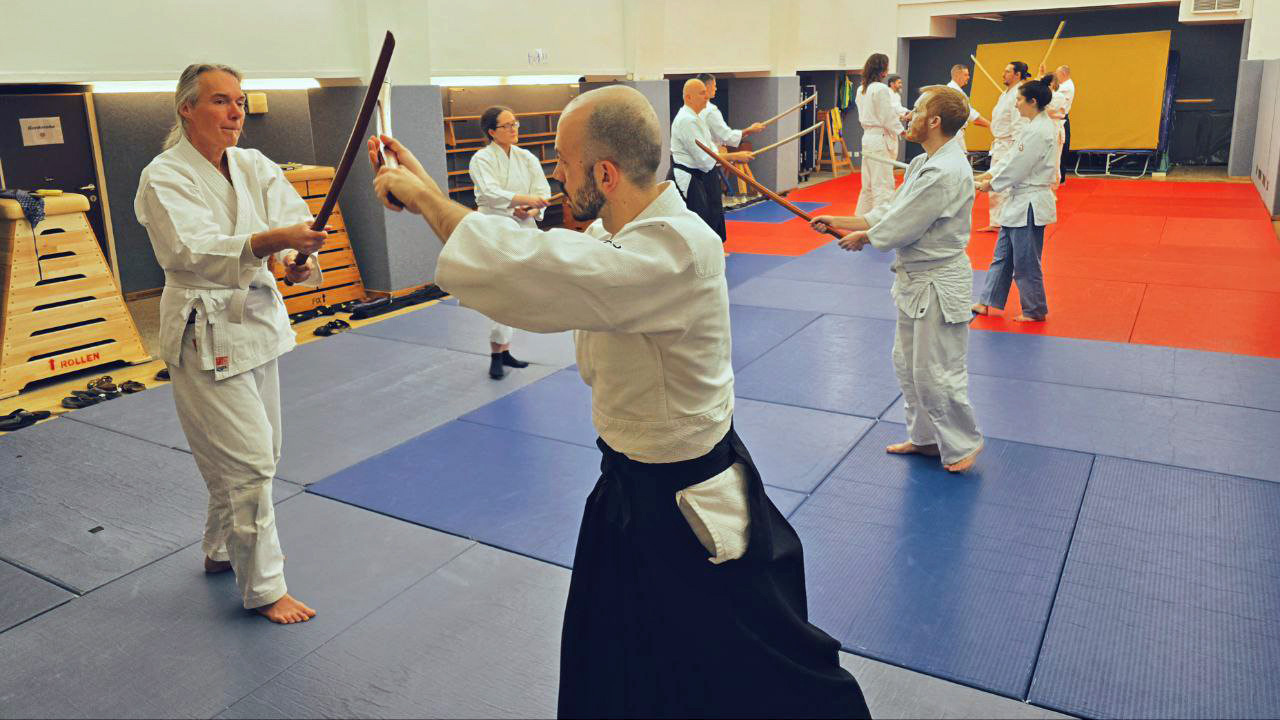
On Sunday, as on Saturday, Bokken and Jo comprised a large part of the practice led by both teachers.

We would like to express gratitude to the instructors and attendees for their contributions to this meeting.

The same weekend in 2027 has been reserved.

Francesco Ingemi

has his dojo in Vercelli (www.ronin-kiaikido.it/) and offers classes for adults and children. He collaborates closely with other local and regional dojos of which there are quite many in Lombardy, Piedmont, Bologna and Tessin, as well as being well connected with southern Italy through his relationship with Shihan Peloni and nationally through one of the larger national italian aikido associations. He has vast experience in Ki Aikido in Italy and through many travels to seminars with former Doshu across Europe. His professional work as a physiotherapist is an ideal complement to Aikido and vice versa.

Michal Hájek

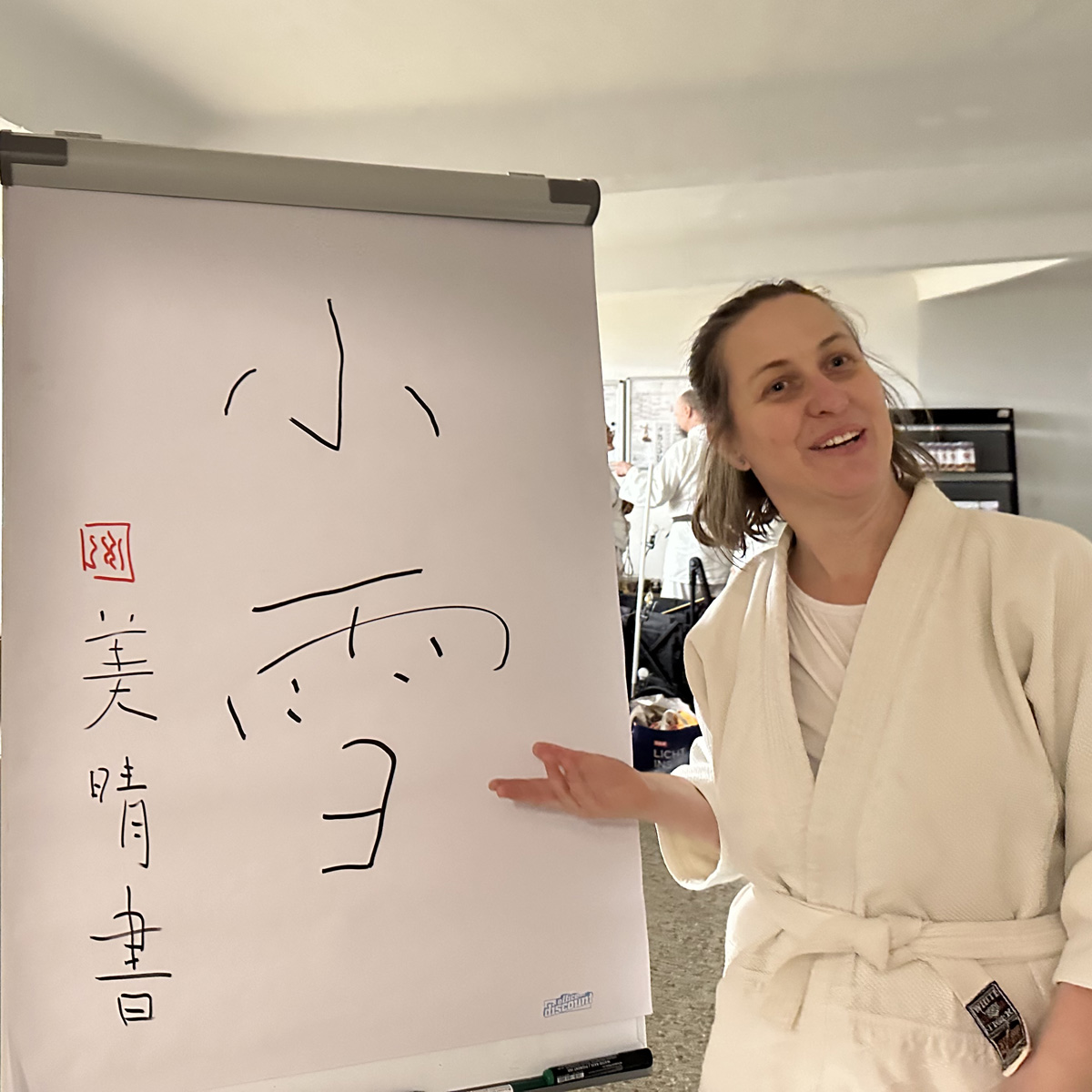
has his dojo in Prague, Czech Republic (www.ki-aikido-praha.cz) and trained aikikai for over a decade before meeting and becoming interested in the teaching of former Doshu Yoshigasaki. He has organised a large number of seminars at his dojo in Prague and has travelled extensively across Europe to participate and teach in seminars. He typically hosts aikido and baionshomyo events at least 4 times a year. He is also proficient in Japanese calligraphy, language and culture as well as being a PhD physicist.


Konpira fune fune

Konpira fune fune (金毘羅 船々) is a "party-"game, played with Geisha and Maiko. Konpira is a famous Shinto shrine on the island of Shikoku, dedicated to the protection of sailors and ships. 800 steps lead up to the shrine. Fune means "ship".
Geisha (芸者, "person of the arts") and Maiko ((舞妓, "child of dance", in formation to become a geisha) play this game with their guests.
Game Rules: If the box is on the table, it must be touched with the flat of the hand. If the box is off, the table must be touched with a closed fist. The loser has to take a sip of sake. The game continues until everyone is sufficiently tipsy.
The video is a part of a clip from YouTube. The original source is unclear; explanations in German can be heard in the background.

Konpira fune fune - Lyrics

金毘羅 船々 Konpira Funefune --- Konpira boat boat
追い手に 帆かけて Oite ni hokakete --- raise the sail
シュラシュシュシュ Shurashushushu --- La, La, La, La
回れば 四国は Mawareba Shikoku wa --- going around Shikoku
讃州 那珂の郡 Sanshuu Nakanogori --- old names of place and province
象頭山 金毘羅大権現 Zōzusan Konpira Daigonken --- Konpira on Zōzu mountain, Daigonken is the deity
いちど まわれば Ichido mawareba --- and again going around


More photos

x
x
x
x
x
x
x
x
x
x
x
x
x
x
x
x
x
x