What is Ki ?

The eternal question

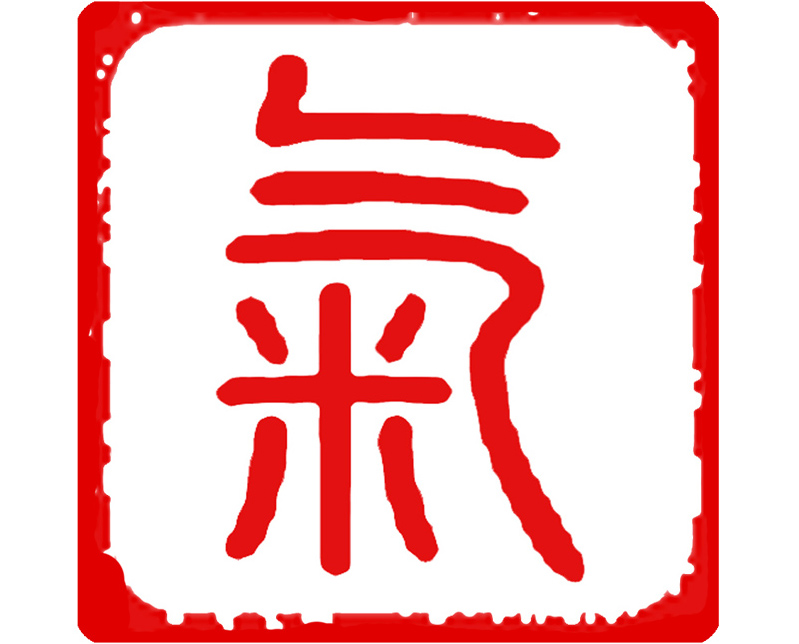
Ki in chinese seal script

Ki in Aikido

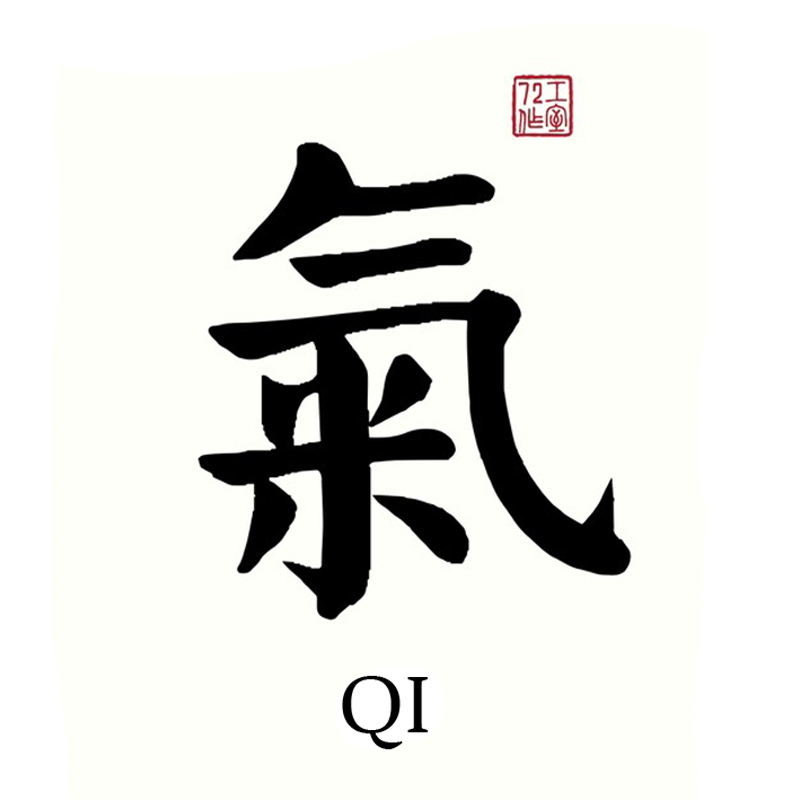
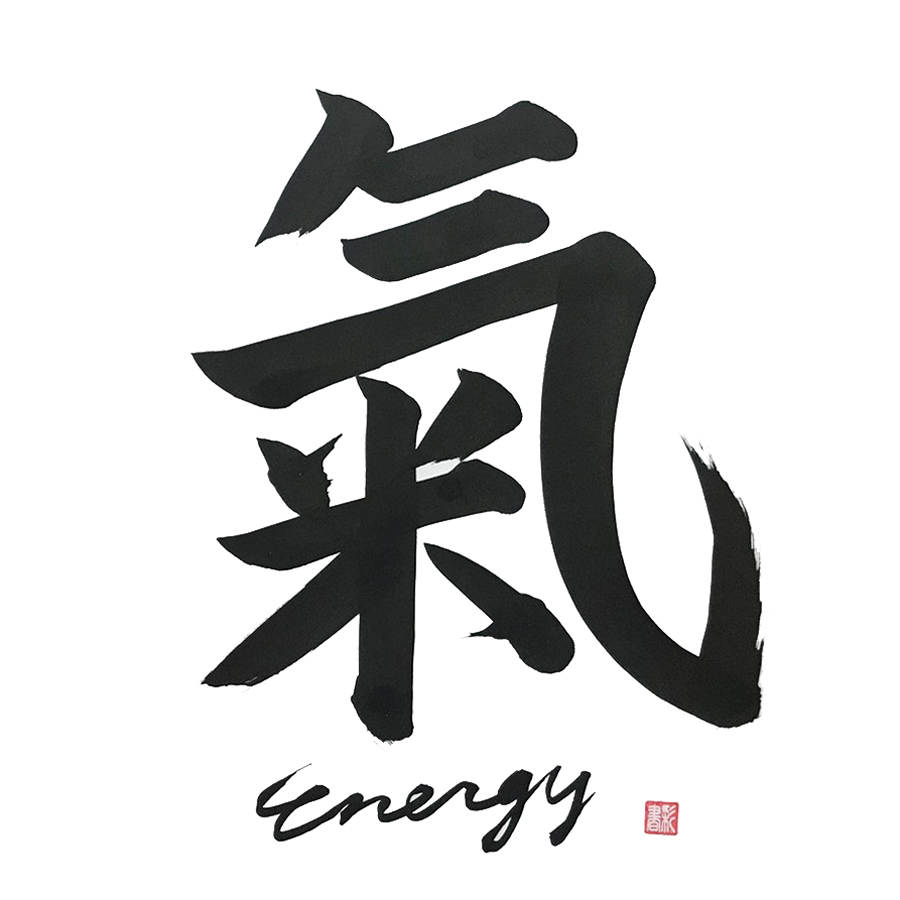
In calligraphy, the old character for Ki (氣) is always used because it is composed of the characters for rice and steam. While the character (気) in the new orthography does include steam, the simplified part suggests "enclose," which does not correspond to the concept of Ki.

Ueshiba Morihei spoke little about Ki in his classes; for him, the concept of Aiki was more important. However, he taught that the basis of the universe is the so-called primordial Ki, shinkū no ki (真空の気), which can be translated as "Ki in empty space." He also called it simply shinki (真気), meaning "true Ki."
His students were to "connect with this cosmic source, rid themselves of ordinary Ki, and allow true Ki to permeate their organs" (Stevens, 1993).
Tohei Koichi popularized Aikido in Hawaii starting in 1953. He often allowed himself to be attacked by experienced and usually physically superior judoka or other martial artists, in order to subdue them with Aikido techniques. He explained his astonishing strength with Ki. §Aikido teaches one to feel the flow of Ki within and to let it flow outwards." He could push away tall people with his little finger using Ki.(Black Belt, 1962).
China

Ki (Chinese qì; Korean ki 기) is a fundamental concept in the traditional philosophy, medicine, and martial arts of East Asia. Explanations of it range from Daoist classics to Neo-Confucianism.
Today, it is generally considered the fundamental substance that forms, animates, and transforms the universe, connecting the microcosm of the human body, such as heart and mind, with the macrocosm of the universe (Cheng 2002; Liu 2015; Zhang 1999).
In the first half of the 17th century, Jesuit missionaries working in China interpreted qi as the air (aer) from Aristotelian natural philosophy, or as breath or spirit in Galenic physiology (Greek: pneuma; Latin: spiritus).
This approach gained prominence in the second half of the 19th century, as many Western missionaries and scholars in China understood qi and other related Chinese concepts in terms of vitalist philosophy, such as "life force," "spiritual energy," or "subtle energies." However, some scholars and practitioners of Chinese medicine believe that the meanings of qi are incompatible with the concept of "energy."(Cheng 2002; Wegmüller 2015).

Energy

Energy is a Western concept. Aristotle (384-322 BCE) used the term energeia (Greek ἐνέργεια) in a purely philosophical sense, meaning "something that can cause something." In 1807, Thomas Young introduced the term into physical mechanics. The most important aspect of this concept is that energy is always conserved in physical processes. It can neither be created nor lost; it is merely transformed into other forms.
This term does not exist in Japanese, and probably not in Chinese either. Energy (エネルギー enerugii, borrowed from German) refers to physical energy and is used, for example, in compound terms for electrical energy, solar energy, or cosmic energy.
In Western usage, the term "energy" is used on the one hand to refer to physical energy, such as energy supply, energy costs, etc. On the other hand, there are also expressions like "I'm full of energy today" or "she puts all her energy into her hobbies." In esoteric circles, energies are also frequently discussed, such as "healing energy," "subtle energies," etc. In any case, the concept of energy in the West, and perhaps now also in East Asia, is not limited to the physical realm.

Everyday use of the term Ki

We see a similar scenario with Ki in Japan. Ki is used both in a philosophical sense and in everyday language. Here are some examples:

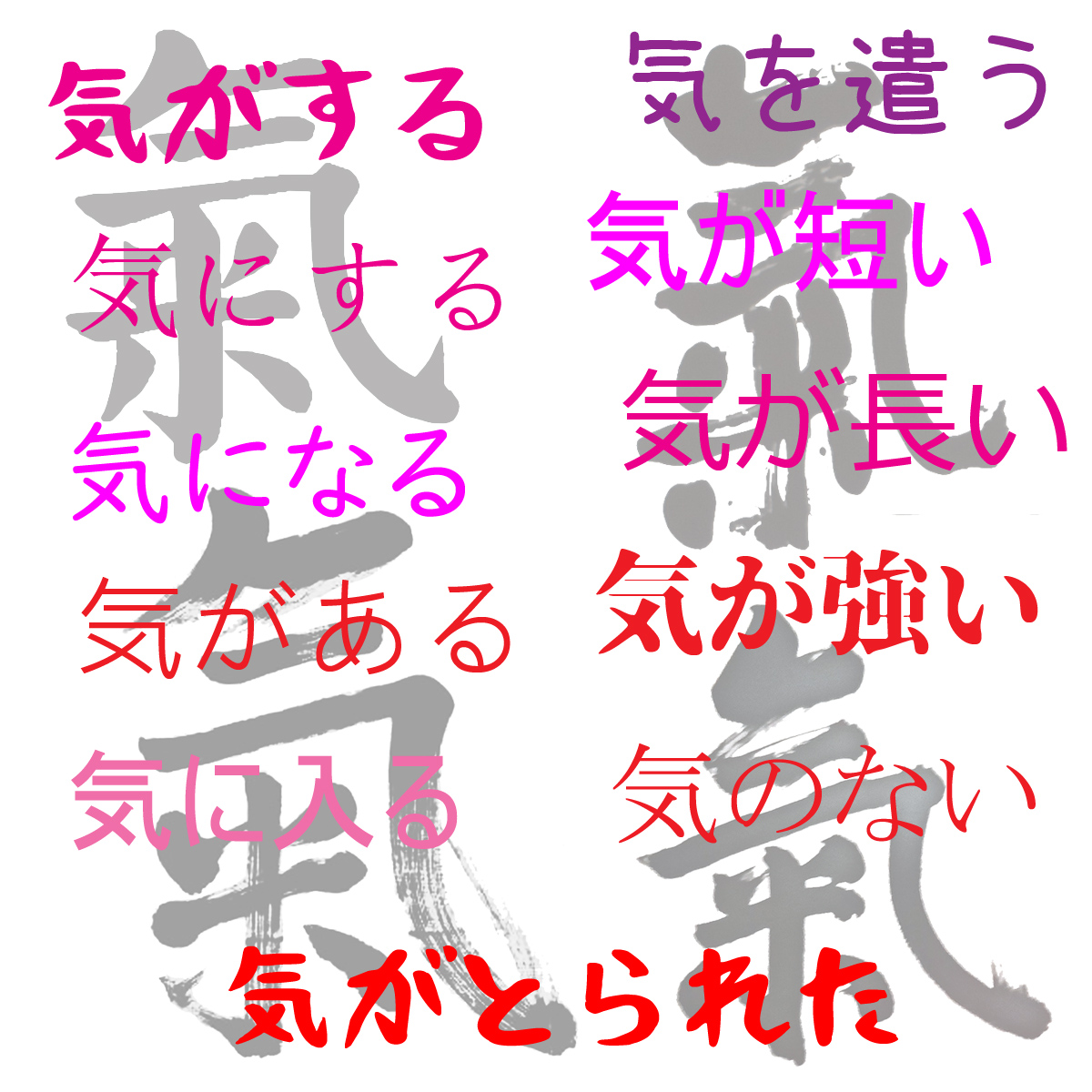
"Do Ki" (ki ga suru 気がする): "think that..." or "feel"
"Do into Ki" (ki ni suru 気にする), ki ni naru (気になる): "to take care of, to worry about"
"There is Ki" (ki ga aru 気がある): "to be interested in"
"Enter the Ki" (ki ni iru 気に入る): "to like"
“Use Ki” (ki o tsukau 気を遣う): “to pay attention”
"Ki is short" (ki ga mijikai 気が短い): "to be quick-tempered"
"Ki is long" (ki ga nagai 気が長い: "to be patient"
"Ki is strong" (ki ga tsuyoi 気が強い): "to be brave"
"no Ki" (ki no nai 気のない): "to be half-hearted"
"the ki is taken away from you" (ki ga torareta 気がとられた): "to be distracted"

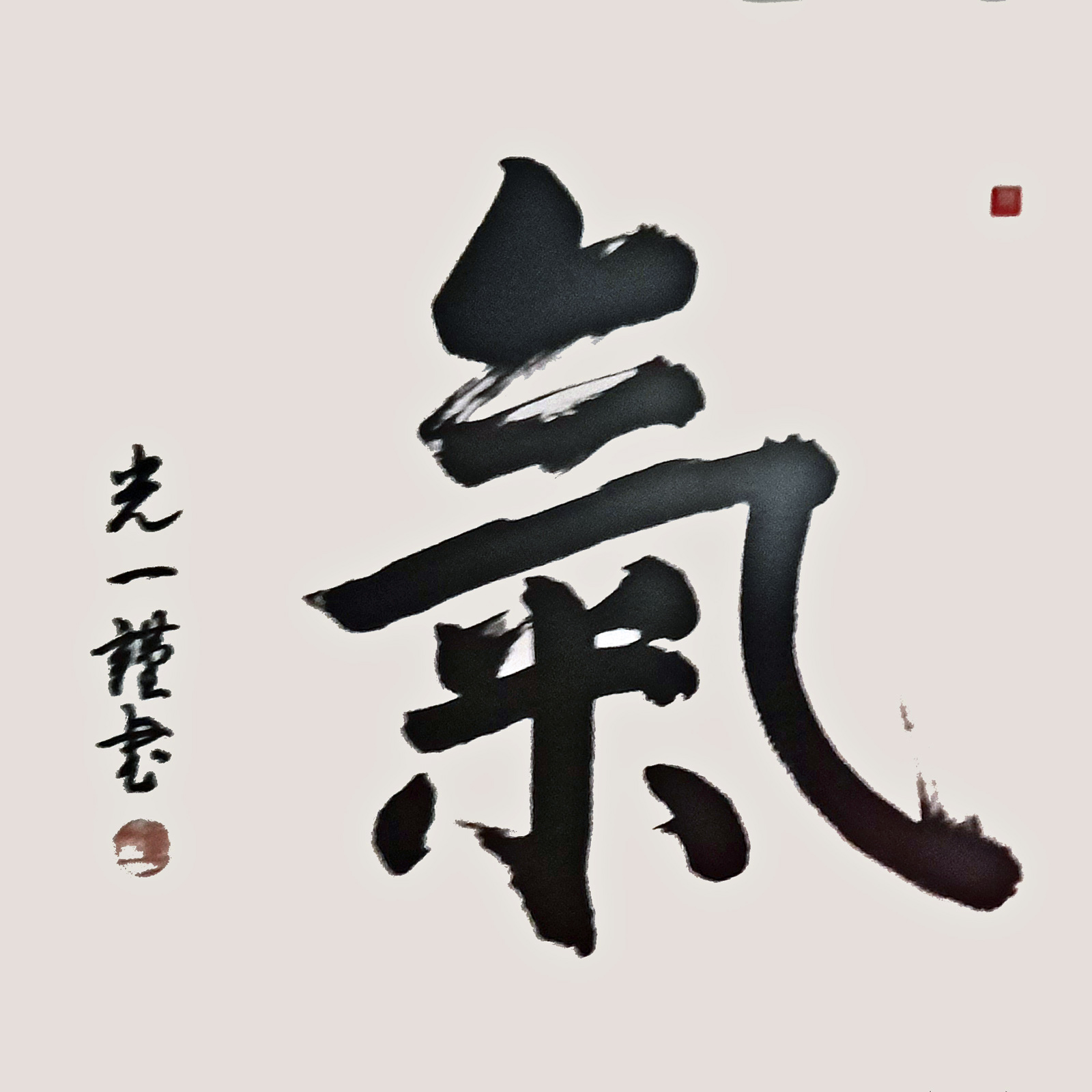
Ki calligraphy written by Tohei Sensei

Tohei Sensei's Interpretation

Tohei Sensei served as a soldier in China during World War II. There, he discovered that by properly relaxing and focusing his mind on the One Point in his lower abdomen, he became filled with Ki. In this way, enemy bullets could not reach him. (Tohei, 1976).
After returning from the war, he began practicing Misogi and became a student of Nakamura Tempu. Nakamura taught Shin Shin Toitsu Do, the unity of mind and body. According to Tohei, this is the prerequisite for connecting with the Ki of the universe. He also used the term kokoro (心), which means "heart" but can also be translated as mind/spirit.
In Hawaii, the impression was gained that Tohei taught the techniques of Morihei Ueshiba and explained them using Nakamura's kokoro (mind) teachings.
His form of Aikido was soon called Ki-Aikido because the term Shin Shin Toitsu Aikido was considered too cumbersome. For Japanese people, "Ki-Aikido" is an ugly word, especially when written in kanji (氣合氣道).
The concept of Ki is central to Tohei's Aikido. Instead of a calligraphy with "Aikido," a Ki calligraphy created by him now hung in the dojos.

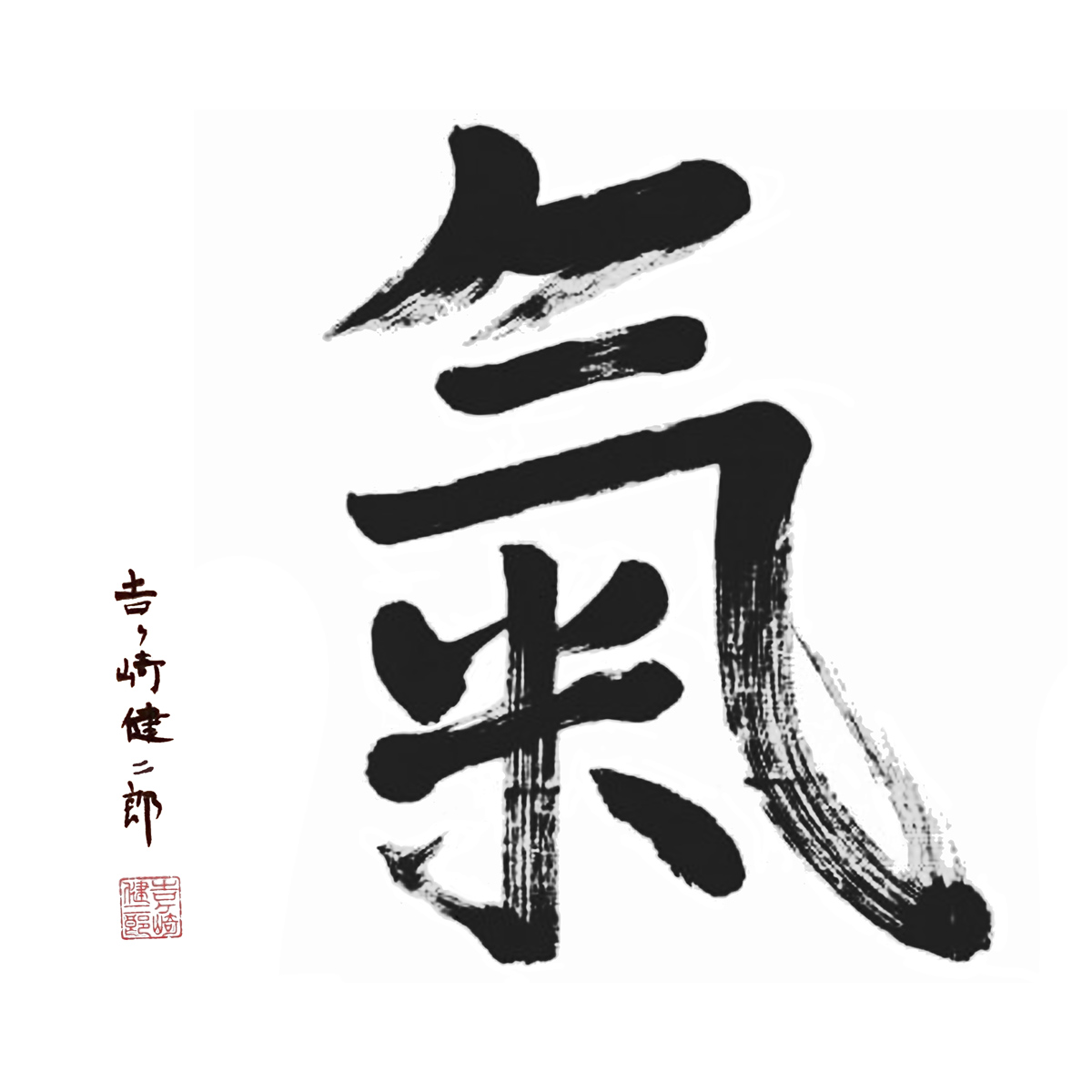
Ki calligraphy written by Yoshigasaki Sensei

Yoshigasaki Sensei

Yoshigasaki Sensei taught Aikido in the Tohei tradition for many years. It's not entirely clear why he separated from his teacher around the turn of the millennium. Perhaps Tohei's teachings were too dogmatic for him. For each of the four fundamental principles of Shin Shin Toitsu Aikido, there were at least five further principles that defined everything in even greater detail. Most recently (2020), Yoshigasaki Sensei stated that he hadn't taught his own Aikido, but rather the Aikido he observed in his students. He probably didn't want to indoctrinate anyone.
Instead of Tohei's Ki calligraphy, there was now Yoshigasaki Sensei's. In his dojo in Furusato, however, he hadn't hung any calligraphy at all.
His standard explanation when asked about Ki was that it was something unclear that would become clearer over time.
Yoshigasaki Sensei also advocated communication without words—which isn't so easy in theoretical Aikido lessons. With this, he probably meant to express that it's pointless to try to put certain things into words, because words restrict the understanding of the subject matter.

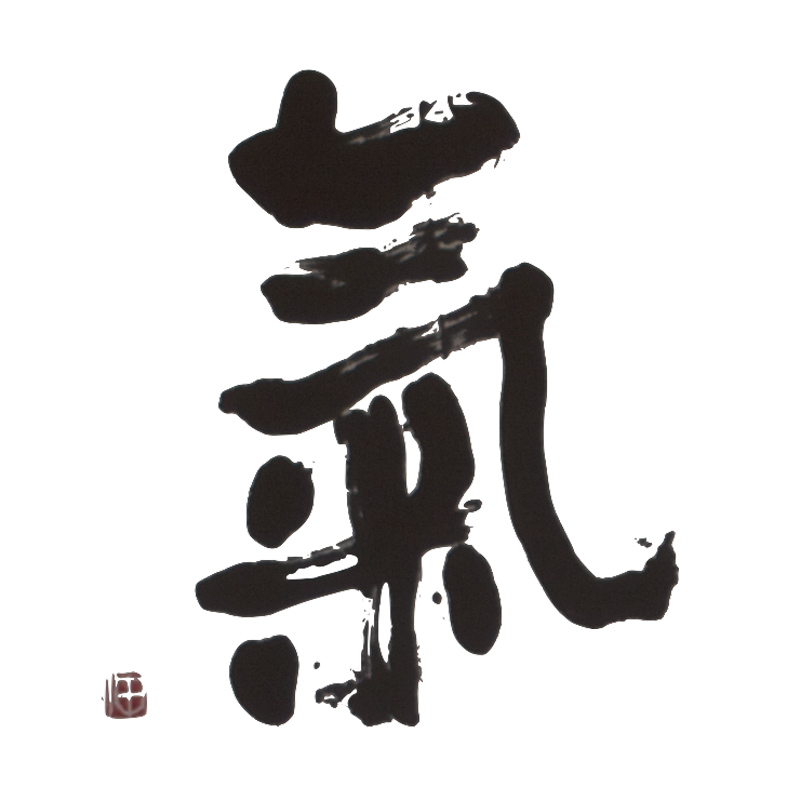
Ki calligraphy written by Watanabe Shin

Final remark

An old explanation for Ki, already common in China and later repeated by Ueshiba Morihei and Tohei Sensei, is: "Ki is a collection of tiny particles that fill the entire universe." Later, it was also interpreted as an electromagnetic field. More recently, it has been proposed that it is a quantum field.
Apparently, attempts are being made to describe Ki using phenomena from objective science (physics). These seem to be more concrete and easier to understand. The comparison with a quantum field is the most successful so far, since this cannot be completely grasped objectively (Heisenberg's uncertainty principle).
However, instead of getting lost in the search for an explanation of such an unclear concept, it is probably better to practice very concrete exercises both in and outside the dojo.

Main source: Stein 2024, Religion, Ki, and Aikido: From Pre-war Japan to the Post-war United States