Aikido

Journey to the Heart

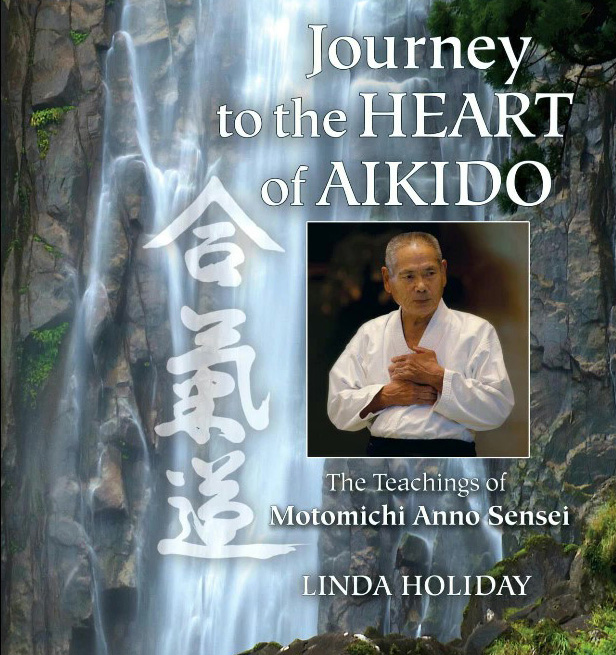
The Book

In many years of diligent work Linda Holiday has written this book, which was first published in 2013. She tells us her way in Aikido and what she learned during her stay in Japan.
Her teacher in Japan, Anno Motomichi Sensei (庵野 素岐 先生), had studied 15 years with Ueshiba Morihei. He recounts and explains the spiritual teachings of the founder of Aikido, always mentioned as O-Sensei.
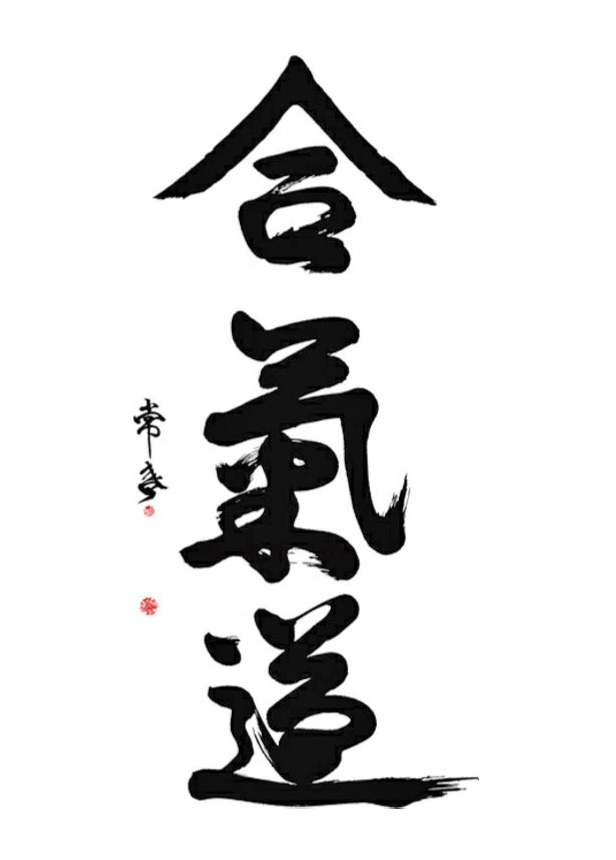
There are many photos from these old times. There are also many calligraphies, brushed by the founder and by Anno Sensei.
This book can be recommended to all Aikidoka who are interested in the philosophy of Ueshiba Morihei in his last decades, which is profoundly explained by Anno Sensei.
Linda Holiday supports her tellings with numerous references. She explains also in detail her considerations translating Anno Sensei's text from Japanese into English. She provides a long list explaining the Japanese terms used in the book, especially those frequently employed by Ueshiba Morihei in his spiritual teachings.
Part I

(text taken from the book)
"Journey to the Heart of Aikido: The Teachings of Motomichi Anno Sensei" consists of two complementary parts.

In Part One, The Journey, Linda Holiday gives us personal narrative and historical information.
Chapter 1 tells the story of her journey on the Aikido path, which drew her from California to Japan in 1973 and finally to the Kumano Juku Dōjō (熊野塾道場) in Shingū (新宮), Wakayama Prefecture.
In Chapter 2, Motomichi Anno is introduced as a child in rural, war-torn Japan, and we follow his evolution in Aikido. His fateful meeting with the founder of Aikido in 1954 set Anno Sensei’s life on a new course, and ultimately led him to become an international teacher of peace. Anno Sensei’s story is braided together with stories of O-Sensei, Hikitsuchi Sensei, and others, providing a new window into the postwar development of Aikido in Japan and its subsequent international expansion.

Part II

In Part Two, the book shifts from narrative to deep reflections on the heart of Aikido, direct from Anno Sensei who studied with the founder.
In Chapter 3, Anno Sensei communicates what it was like for him to study personally with O-Sensei, and shares his memories of O-Sensei’s teachings and presence.
In Chapter 4, he explores the basic spiritual principles that are the foundation of Aikido practice, and gives thoughtful answers to questions posed by Western students.
In Chapter 5 Anno Sensei explains how the principles of Aikido can be expressed and cultivated in the physical training of Aikido.
Chapter 6 introduces the traditional practices of breathing and purification in Aikido and applies the concept of misogi (purification) to other parts of life.
In Chapter 7, Anno Sensei explores the meaning of terms O-Sensei used to "express the inexpressible" such as kami (神) and the Floating Bridge of Heaven (天の浮橋), and offers an essential understanding of interdependence and gratitude.
In the final Chapter 8 Anno Sensei articulates the value of Aikido’s spiritual philosophy and pragmatic practice to a global community urgently in need of peace.
In the appendix Linda Holiday gives detailed instructions with numerous photos for the spiritual exercise Chinkon Koshin no Hō (鎮魂帰神法) as learned in the Kumano Juku Dōjō.

Linda Holiday writes:

My own motivations in writing Journey to the Heart of Aikido are simple ones: gratitude and service.
I believe the best way to repay the generosity of Motomichi Anno Sensei, and all of the Aikido teachers who have shared their inspiration with me, is to pass it on.
I dedicate Journey to the Heart of Aikido to the hope that the integrated spiritual practice of Aikido will play a positive role in the evolving future of humankind.
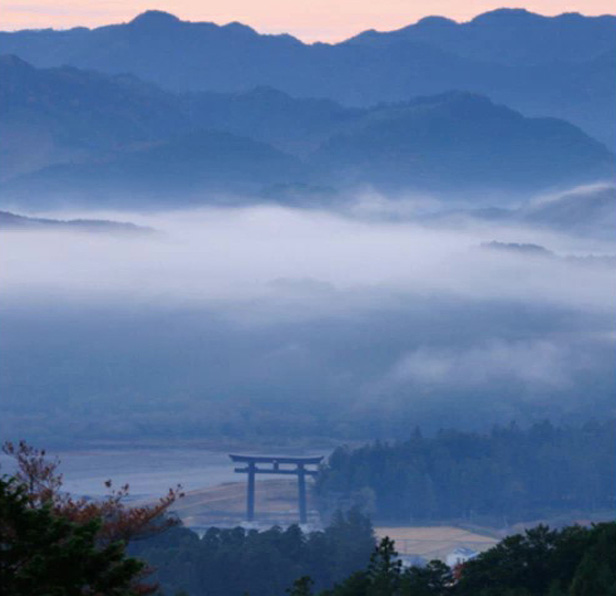
The photo shows Anno Sensei (*1931) and Linda Holiday (*1953) visiting the Kumano Hongū Shrine (熊野本宮大社), deep in the rugged mountains of the Kii Peninsula. The shrine played an important role in the life of Ueshiba Morihei. In 2004 the mountains became part of a UNESCO World Cultural and Natural Heritage site, under the name "Sacred Sites and Pilgrimage Routes in the Kumano Range" (熊野参詣道).
(The photos are taken from the book.)